

Blue vs Violet Shampoo & Conditioner: What’s the Difference (and Which One Do You Need)?
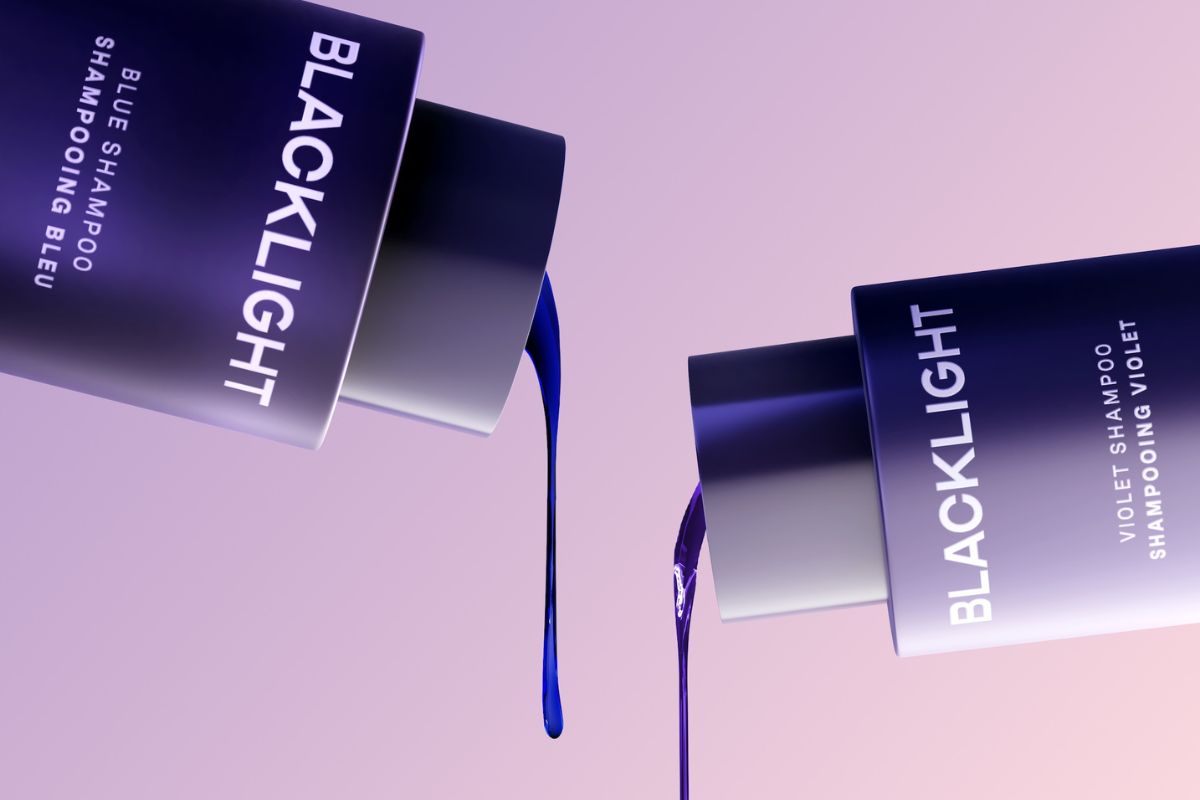
Violet shampoo (also called purple shampoo) neutralizes yellow tones — it's for platinum, icy, or light blonde hair. Blue shampoo neutralizes orange tones — it's for dark blonde, balayage, or light brunette hair. Both work by color theory: pigments on opposite sides of the color wheel cancel each other out. Match your shampoo to your unwanted undertone, not your hair color.
Why Blonde Hair Develops Brassiness
Brassiness isn't random — it's chemistry. When hair is lightened, the blue pigment molecules inside the hair shaft (the ones that keep hair looking cool and ash-toned) are the smallest and most fragile. They fade out first, leaving warmer yellow and orange pigments behind. The result is that characteristic brassy warmth that appears weeks after a salon appointment.
External factors accelerate this process — UV exposure, hard water minerals, sulfate shampoos, heat styling, and chlorine all open the hair cuticle and speed up pigment loss. Understanding what type of warm tone your hair is showing is the first step to choosing the right toning product.
The Color Theory Behind Toning Shampoos
Toning shampoos work on a simple principle: pigments on opposite sides of the color wheel cancel each other out. Your stylist applies this same logic when toning your hair after bleaching.
| Brassy Tone in Hair | Neutralizing Color | Product to Use |
|---|---|---|
| Yellow | Violet / purple | Violet or purple shampoo & conditioner |
| Orange / copper | Blue | Blue shampoo & conditioner |
| Light orange / warm gold | Violet (broader spectrum) | Violet or purple shampoo & conditioner |
Every time you use a toning shampoo, you are depositing a micro-dose of the neutralizing pigment onto your hair shaft. Used consistently, this keeps the cool tone your salon achieved looking fresh between appointments.
Purple Shampoo vs Violet Shampoo: Are They the Same?
Yes — purple shampoo and violet shampoo are the same thing. The two terms are used interchangeably in the hair care industry, and the only real difference is language: violet is the more precise professional color term, while purple is the common consumer word for the same pigment.
Both deposit violet or purple pigment onto the hair shaft to cancel yellow brassiness. If you've been searching for "purple shampoo for blonde hair" — violet shampoo is exactly what you're looking for. The same applies to conditioners: a violet conditioner and a purple conditioner work identically.
What Violet Shampoo & Conditioner Do
Violet shampoo and violet conditioner (also marketed as purple shampoo) are formulated to neutralize yellow and pale gold tones in lightened hair. Violet sits directly opposite yellow on the color wheel, so violet pigment cancels yellow pigment when the two combine in the hair shaft.
Best for:
- Platinum blonde and icy blonde hair
- Light ash blonde and silver hair
- Grey and white hair turning yellow
- Light highlights in naturally fair hair
- Any hair showing pale yellow or "golden" brassiness
How it works:
Violet pigments in the shampoo and conditioner deposit onto the hair shaft during washing. The more yellow your hair is, the more noticeably the violet pigment counteracts it, restoring a cooler, brighter blonde appearance. The effect builds progressively with consistent use.


For on-the-go toning between washes, pair with the Violet Neutralizing Spray — a leave-in toning spray that refreshes cool tone without a full wash.
What Blue Shampoo & Conditioner Do
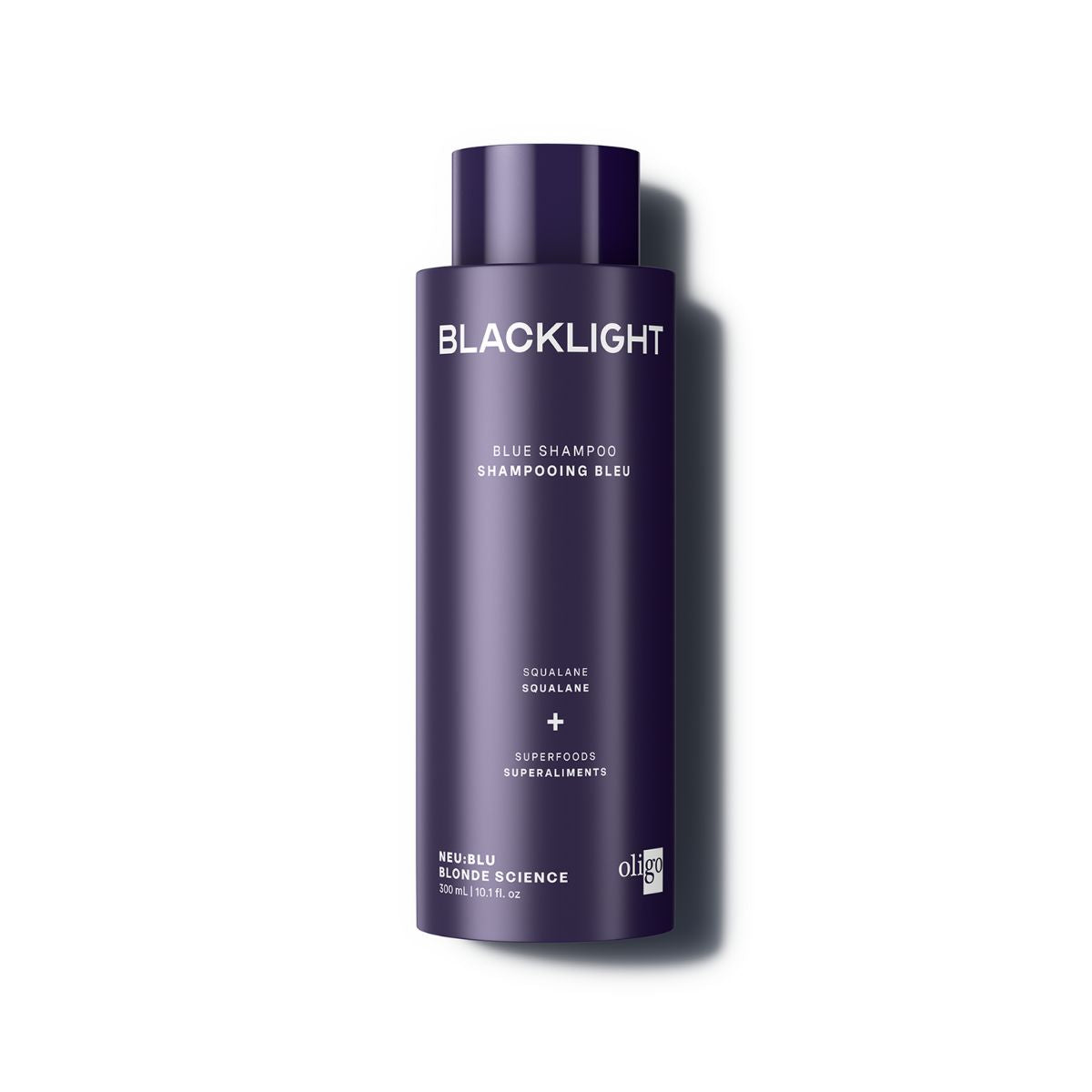
Blue shampoo and blue conditioner are formulated to neutralize orange, copper, and brassy warm tones in darker blonde and lightened hair. Blue sits directly opposite orange on the color wheel, making it the correct neutralizing pigment for orange brassiness.
Best for:
- Dark blonde and beige blonde hair
- Balayage and ombré styles with warm roots
- Light brunette or "bronde" hair
- Hair showing orange, copper, or red-orange brassiness
- Hair lightened from medium or dark brown
How it works:
Blue pigments deposit onto the hair shaft and directly cancel the orange and warm copper undertones that surface as hair lightens and its toner fades. The result is a more neutral, cooler-toned, and less brassy appearance — without needing a salon visit.


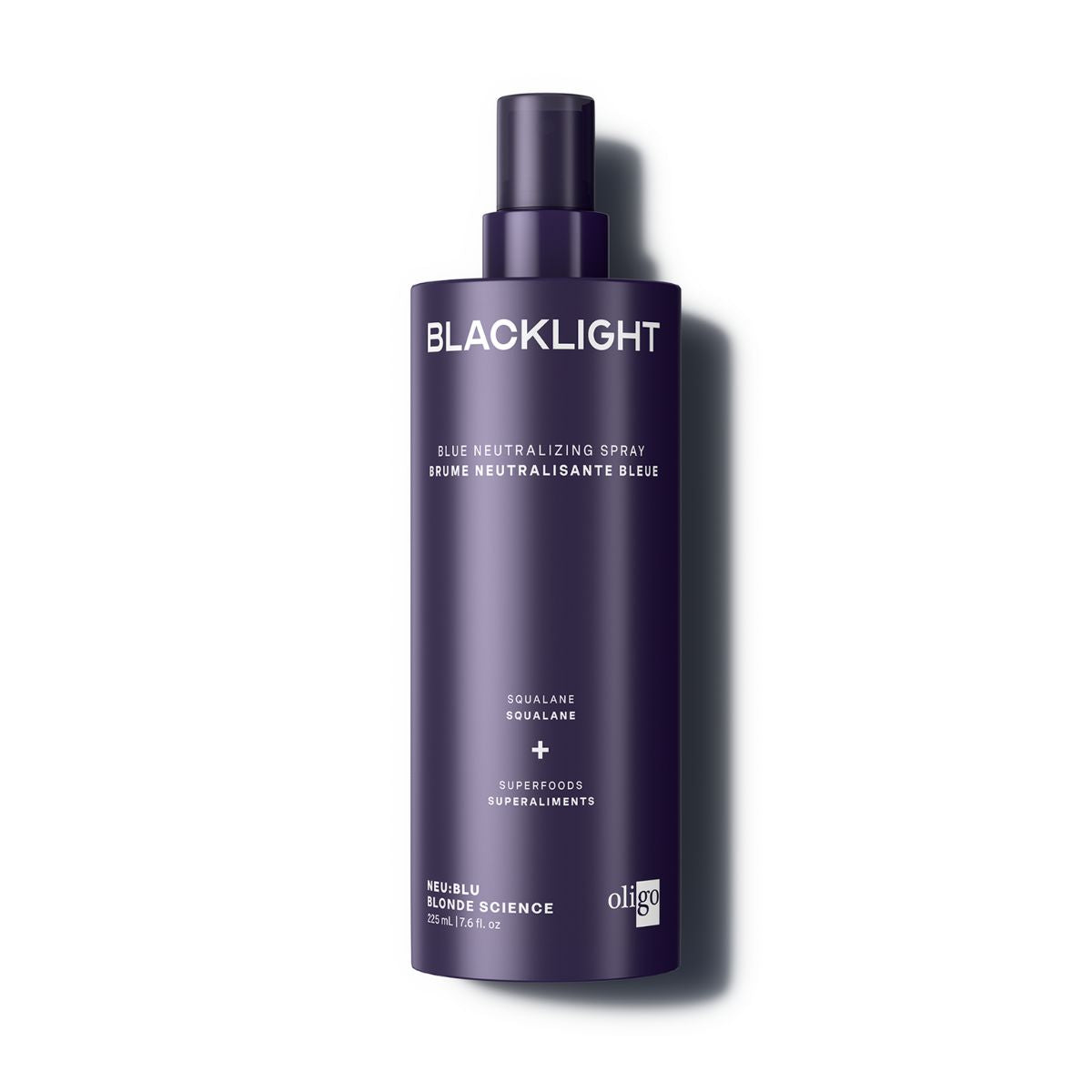
Between washes, reach for the Blue Neutralizing Spray — a leave-in treatment that delivers targeted blue toning without shampooing, perfect for day 2 or 3 hair.
Blue vs Violet Shampoo & Conditioner: Side-by-Side Comparison
| Feature | Violet / Purple Shampoo & Conditioner | Blue Shampoo & Conditioner |
|---|---|---|
| Also called | Purple shampoo, violet shampoo | Blue shampoo |
| Neutralizes | Yellow and pale gold tones | Orange, copper, and warm brassy tones |
| Color wheel opposite | Opposite yellow | Opposite orange |
| Best hair types | Platinum, light blonde, silver, grey | Dark blonde, balayage, light brunette |
| Result | Brighter, cooler, more icy blonde | Neutralized warmth, less brassy, more ashy |
| Avoid on | Strongly orange or copper-toned hair | Platinum or very pale yellow hair (risk of green) |
| Frequency | 1–2× per week | 1–3× per week |
| Leave-on time | 1–3 minutes | 2–5 minutes |
How to Choose the Right One for Your Hair
The decision comes down to one thing: what unwanted tone is your hair showing? Check your hair in natural light — not bathroom fluorescents — and identify the dominant brassy tone.
Choose Violet (or Purple) If Your Hair Looks…
- Pale yellow or "straw" coloured
- Dull golden or washed-out blonde
- Yellowish at the ends
- Slightly warm but not orange
Choose Blue If Your Hair Looks…
- Orange or copper-toned
- Warm and brassy at the roots
- Red-orange where it was lightened
- Noticeably "warm" or "peachy"
Not sure? Ask your stylist what undertone your natural hair pulls — that will almost always tell you whether you need violet or blue between appointments. You can also read our guide on why blonde hair turns brassy for a deeper breakdown of undertones and pigment science.
Can You Use Both Blue and Violet Products?
Yes — but not in the same wash session. If your hair shows both yellow and orange tones (common with balayage, or when color is in different stages of fading at roots vs ends), you can alternate:
Wash 1 — Violet (or Purple) Shampoo & Conditioner
Addresses any yellow or gold tones across your length and ends.
Wash 2 — Blue Shampoo & Conditioner
Targets any remaining orange or warm brassy tones, especially at the root area.
Wash 3 — Hydrating Shampoo & Conditioner
Use a non-toning, nourishing formula to restore moisture and prevent over-toning or dryness.
With Blacklight Blonde Science, both the violet and blue lines are formulated with the same hydrating and reparative base, making alternating simple and safe for your hair's health.
Pro Tips for Best Results
Start toning immediately after colouring
Don't wait for brassiness to appear. Begin your toning shampoo routine at your very first post-colour wash to stay ahead of pigment fade.
Use 1–2 times per week maximum
Overuse can lead to over-toning or dryness. On non-toning wash days, use a hydrating, sulfate-free shampoo from the HYD Hydrating line.
Always follow with a conditioner or mask
Toning shampoos focus on pigment deposit — always follow with a hydrating conditioner or deep treatment to seal the cuticle and retain moisture.
Leave it on for the full recommended time
Leave violet or purple shampoo on 1–3 minutes and blue shampoo 2–5 minutes. The pigment needs contact time to deposit effectively.
Seal with a Repair Mask weekly
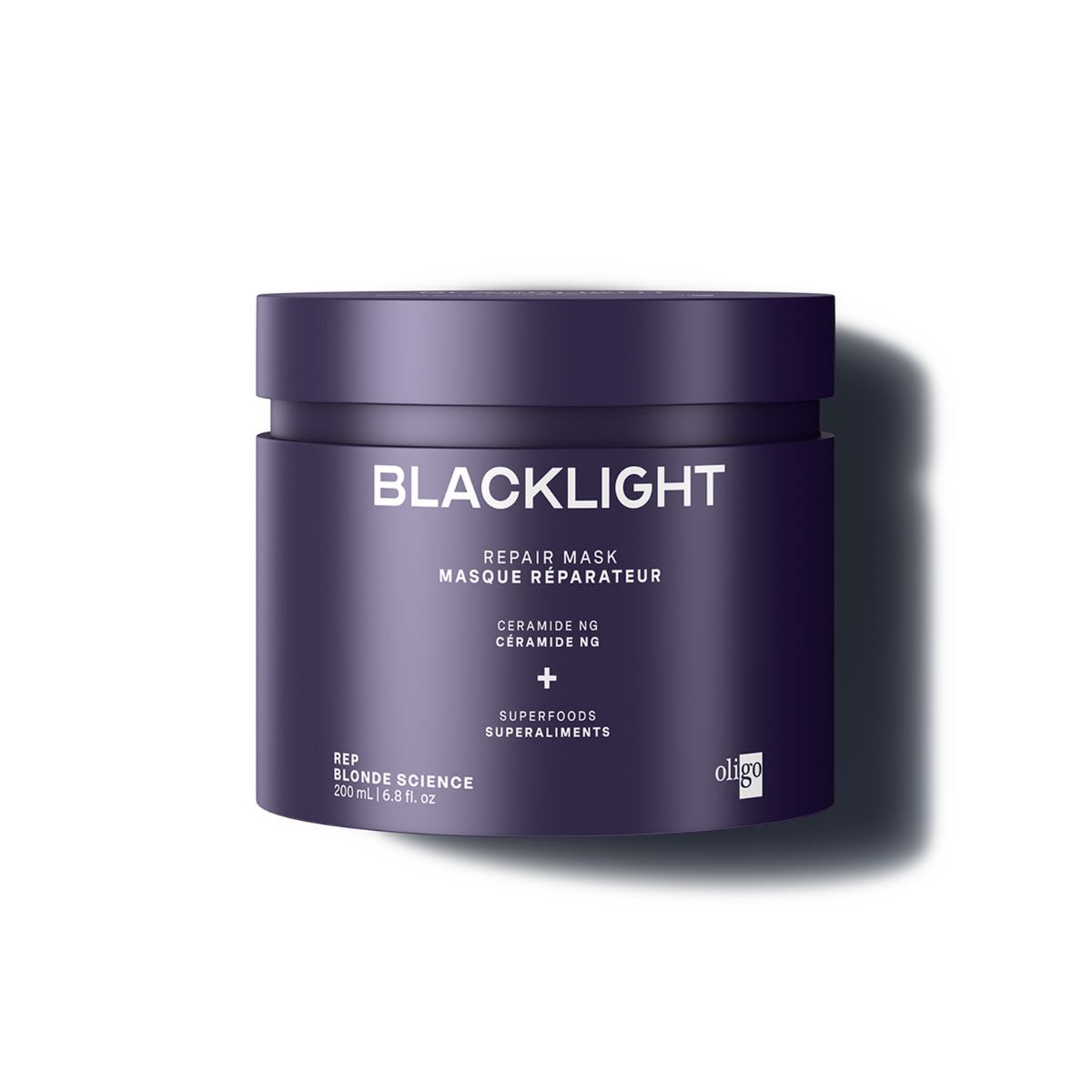
A sealed cuticle retains toning pigment longer. Use the Blacklight Repair Mask once a week on towel-dried hair, left on 5–10 minutes, to lock in tone and restore elasticity to bleached strands.

Why Choose Blacklight Blonde Science?
Blacklight Blonde Science formulas are inspired by skincare and nutritional science — combining toning pigments with hydrating and reparative ingredients so every wash does more than just tone. Our toning lines are sulfate-free, paraben-free, and enriched with nourishing oils and advanced hydration technology specifically developed for lightened and bleached hair.
Whether you're cancelling yellow brassiness or neutralizing orange tones, Blacklight Blonde Science has a targeted formula — so you're not just correcting tone, you're actively improving the health of your hair with every wash.
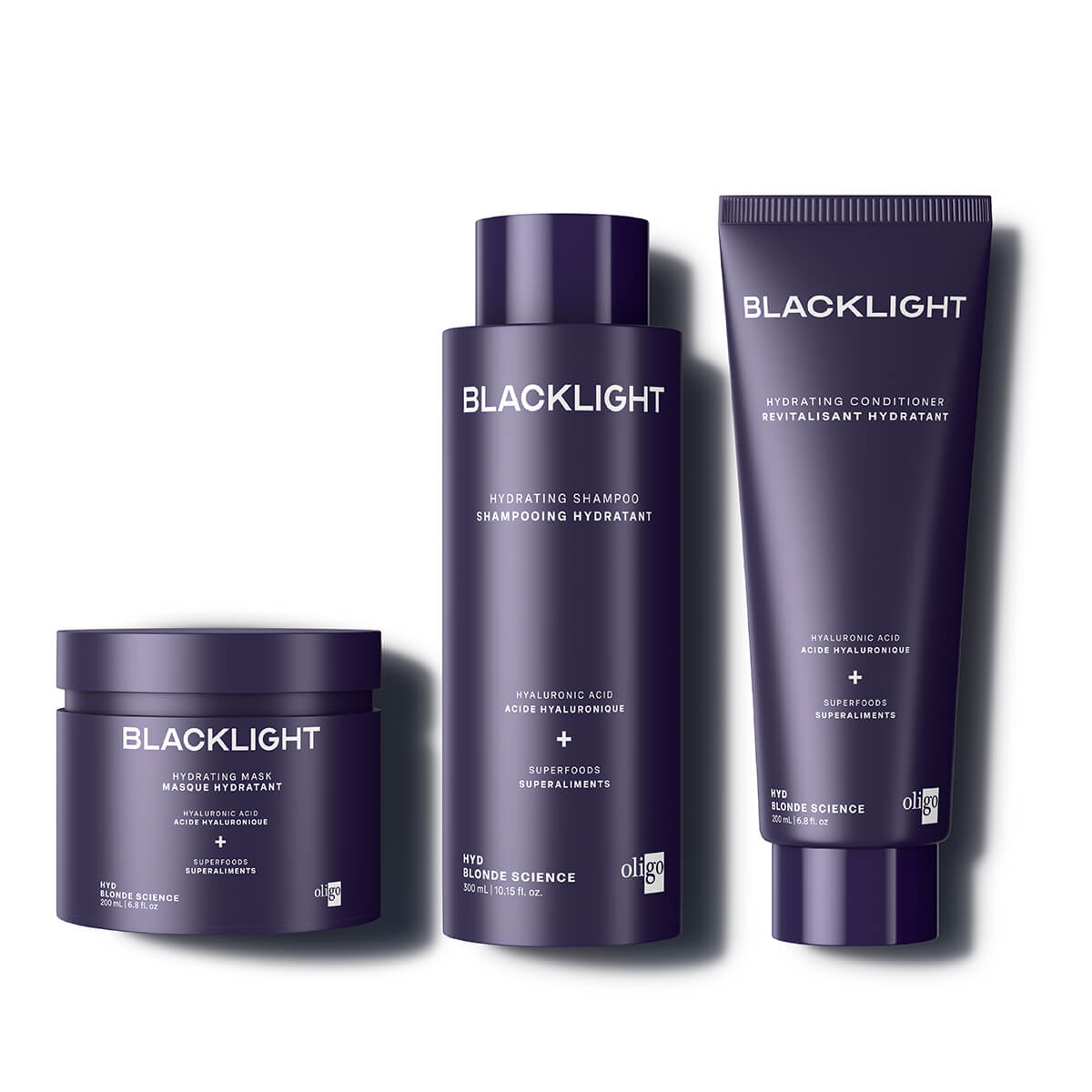
New to the brand? The Hydrating Bundle gives you a complete shampoo, conditioner, and mask routine at up to 20% off — a simple starting point for any blonde looking to maintain colour between salon visits.
Frequently Asked Questions
What is the difference between blue and violet shampoo?
Blue shampoo neutralizes orange and copper tones using blue pigment, which sits opposite orange on the color wheel. Violet shampoo neutralizes yellow tones using violet pigment, which sits opposite yellow. Blue shampoo is best for dark blonde, balayage, or lightly brunette hair. Violet shampoo is best for platinum, icy blonde, silver, or grey hair. Using the wrong one won't correct your tone and may produce unexpected results — particularly, using blue on very pale blonde hair can result in a greenish tint.
What is the difference between purple shampoo and violet shampoo?
Purple shampoo and violet shampoo are the same thing. Violet is the more precise professional color term, while purple is the common consumer word for the same pigment. Both deposit violet or purple pigment onto the hair shaft to cancel yellow brassiness in blonde, platinum, silver, and grey hair. If you have been searching for purple shampoo, violet shampoo is exactly what you are looking for.
How do I know if I need violet or blue shampoo?
Check your hair in natural daylight. If it looks yellow or pale gold — use violet or purple shampoo. If it looks orange, copper, or warm brassy — use blue shampoo. Your natural undertone and the level to which your hair was lifted are the two biggest clues. If your stylist lightened you from dark brown to a beige blonde, you will likely need blue. If you're a natural light blonde or were lifted to platinum, you will likely need violet.
Can I use violet shampoo on brown hair?
Yes, violet shampoo can be used on lightened brown hair, but it will only address yellow tones. If your brown or dark blonde hair is showing orange or copper brassiness — which is very common when lightening from brown — blue shampoo will be significantly more effective.
How often should I use violet or blue shampoo and conditioner?
Use toning shampoo 1–2 times per week, depending on how quickly your hair develops brassiness. On non-toning wash days, use a gentle sulfate-free hydrating shampoo to maintain moisture without over-depositing pigment. Always follow any toning shampoo with a matching conditioner or treatment mask.
Will violet shampoo make my hair purple?
Not when used correctly. Leaving violet shampoo on for too long or overusing it (more than 2–3 times per week) may create a temporary lavender or purple tint, especially on very light or porous hair. Start with 1–2 minutes contact time and adjust from there. If a purple tint does appear, washing once with a gentle clarifying shampoo will remove it.
Can I use blue shampoo on yellow blonde hair?
It is not recommended. Blue and yellow pigments combine to create green — so using blue shampoo on pale yellow or platinum blonde hair risks a greenish tint. For yellow-toned blonde hair, always use violet or purple shampoo. A clarifying shampoo can correct any accidental green tint.
Do I need both a toning shampoo and a toning conditioner?
For best results, yes. Using a matched toning shampoo and conditioner enhances the toning effect and ensures hair stays hydrated. A conditioner alone can also provide gentler toning — some stylists recommend conditioner-only toning for hair that tends to absorb pigment quickly. With Blacklight Blonde Science, the violet conditioner and blue conditioner also add nourishment and shine on top of the toning benefit.
Can I alternate blue and violet shampoo in the same routine?
Yes, alternating is a smart approach for hair that shows both yellow and orange tones — common with balayage, ombré, and hair that is at different lightening levels at root vs ends. Use violet on one wash day and blue on the next. Never mix them in the same wash session. Always alternate with a hydrating shampoo to prevent over-toning or dryness.
Does violet shampoo work on natural hair?
Violet shampoo can subtly cool down yellow tones in natural, uncoloured blonde or light hair — particularly useful for hair that develops warmth from sun exposure or hard water. The effect is more subtle than on lightened or toned hair, since natural blonde has a more intact cuticle that is harder to penetrate. For noticeable results on natural hair, leave it on slightly longer (2–3 minutes) and use consistently.
Find the Right Toning Routine for Your Blonde
Shop violet, purple, and blue shampoos, conditioners, and treatments — all formulated with science-led blonde hair care.
Shop All Toning Products View Hair Bundles (Save up to 20%)Read more
Discover why blonde hair turns brassy and how to keep it bright using violet shampoo, hydration, and protective treatments.
Brassy hair isn't random — it's chemistry. When hair is lightened, the blue pigment molecules, the smallest and most fragile, fade out first. Once they're gone, the warm yellow and orange pigments ...

Discover Your Ideal Haircare Routine
Answer a few quick questions to get your personalized routine (and receive a gift!).