

How to Fix Brassy Hair at Home: The Complete Guide
To fix brassy hair at home: identify whether your hair is showing yellow tones (use violet or purple shampoo) or orange tones (use blue shampoo). Apply the correct toning shampoo, leave on 3–5 minutes, follow with a matching conditioner, and seal with a repair mask. For same-day results without washing, use a neutralizing spray directly on dry hair. Most people see a visible difference after 1–3 uses.
Step 1: Identify Your Type of Brassiness
Before reaching for any product, you need to identify exactly what type of brassiness you're dealing with. This is the single most important step — using the wrong toning product will either do nothing or make things worse. The fix for yellow hair and the fix for orange hair are completely different.
Check your hair in natural daylight — not bathroom lighting, which masks warm tones. Look at your ends, your roots, and the mid-lengths separately.
Your hair looks yellow if…
- Ends appear pale gold or "straw" coloured
- Hair looks dull and washed-out
- Colour looks faded but not dramatically warm
- You have platinum, light blonde, silver, or grey hair
Your hair looks orange if…
- Roots or mid-lengths appear copper or brassy
- Hair looks noticeably warm or "peachy"
- Lightened sections look red-orange
- You have dark blonde, balayage, or bronde hair
Step 2a: How to Fix Yellow Brassy Hair
Yellow brassiness is the most common complaint for light blonde, platinum, silver, and grey hair. It happens because blue pigment molecules — the smallest and most fragile in the hair shaft — fade faster than yellow and orange molecules. Once enough blue is gone, the underlying yellow warmth dominates.
The fix is violet (purple) shampoo and conditioner, used consistently.
How to use violet shampoo to fix yellow hair:
Wet hair thoroughly
Apply to fully saturated hair for even pigment distribution. Dry or partially wet hair absorbs unevenly and can create patchy results.
Apply violet shampoo generously
Work through from roots to ends. Don't be shy — you need full coverage for even toning. Lather well.
Leave on 3–5 minutes
For fixing existing brassiness, leave on longer than the minimum — 3 to 5 minutes. The pigment needs contact time to deposit effectively. For very porous or damaged hair, start with 2 minutes and increase gradually.
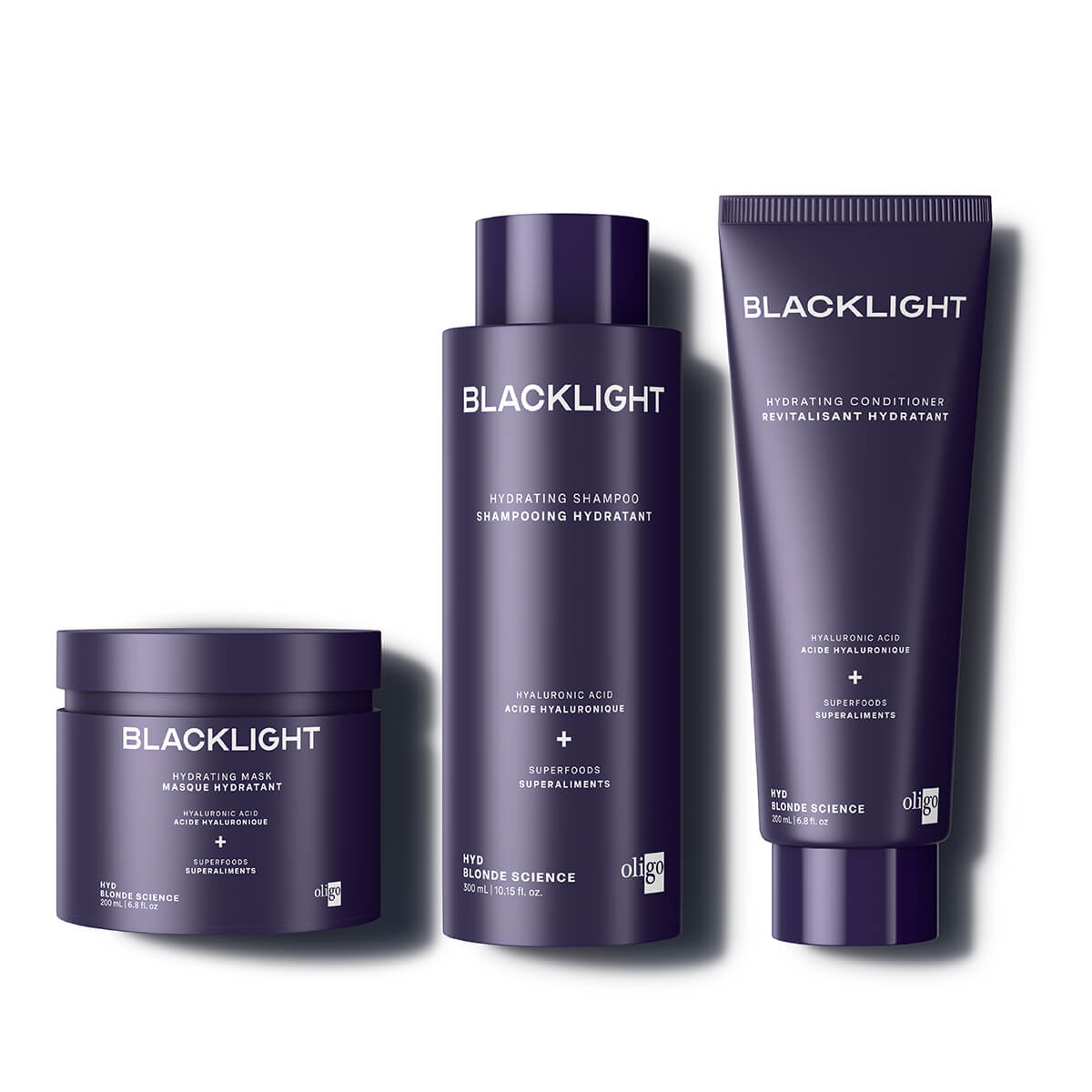
Rinse thoroughly and follow with violet conditioner
The matching conditioner adds a second layer of toning pigment while hydrating the hair. Don't skip this step — it significantly enhances and prolongs the toning effect.
Repeat 2–3 times per week until tone is corrected
For significant brassiness, consistent use over 1–2 weeks is needed. Once tone is where you want it, drop to 1–2 times per week to maintain.


Step 2b: How to Fix Orange Brassy Hair
Orange brassiness is most common in dark blonde, balayage, bronde, and hair that has been lightened from medium or dark brown. When hair with higher natural warmth (more pheomelanin) is lightened, it often doesn't lift all the way to yellow — stopping at an orange or copper stage instead. The toner your stylist applies masks this, but as it fades, the orange resurfaces.
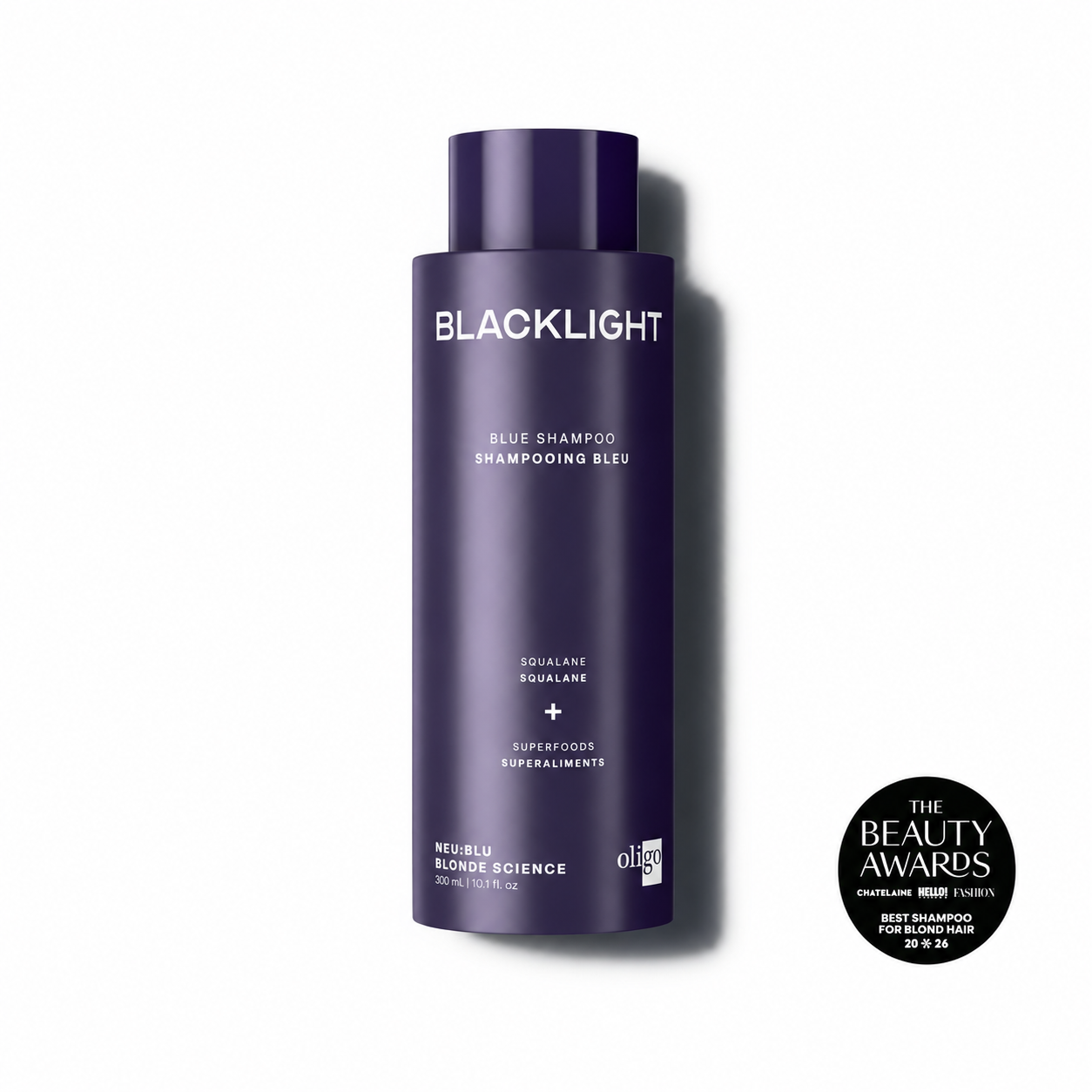
The fix is blue shampoo and conditioner — the only product that directly cancels orange on the colour wheel.
How to use blue shampoo to fix orange hair:
Wet hair thoroughly
Fully saturate before applying. Concentrate more product on the areas showing the most orange — often the mid-lengths and roots where the hair is darkest.
Apply blue shampoo and work through
Lather from roots to ends. Pay special attention to warm, copper-toned sections. The blue pigment needs to fully coat the hair shaft to work.
Leave on 3–5 minutes
Blue shampoo generally needs slightly more contact time than violet — 3 to 5 minutes is the target for correcting existing brassiness. For severe orange tones, you can go up to 7 minutes maximum.
Rinse and follow with blue conditioner
The blue conditioner reinforces the toning effect and adds essential moisture. Orange-toned hair from repeated lightening is often dry — the conditioner addresses both issues simultaneously.
Repeat 2–3 times per week until corrected
Orange brassiness can be more stubborn than yellow — consistent use over 1–2 weeks gives the best results. Once corrected, maintain with 1–2 uses per week.


Step 3: Fix Brassiness Without Washing
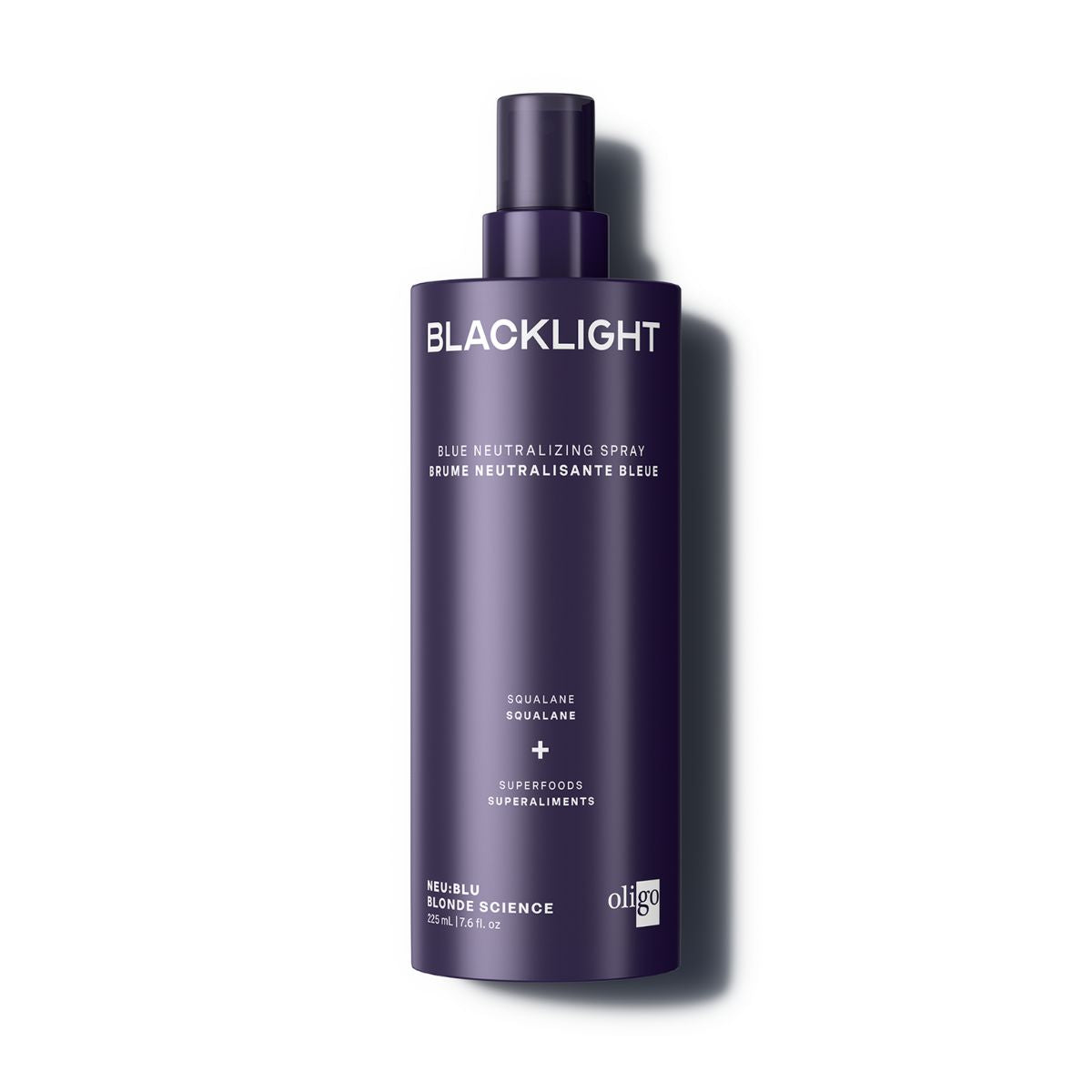
One of the most underused tools for fixing brassy hair is a neutralizing spray — a leave-in toning product that deposits pigment directly onto dry or damp hair without a full wash cycle. This is useful when your hair looks brassy on day 2 or 3, when you don't have time to shampoo, or when you want to top up tone between regular washes.
Neutralizing sprays work on the same colour-theory principle as toning shampoos — violet sprays cancel yellow tones, blue sprays cancel orange tones — but the delivery is faster and more targeted. Apply to the sections showing the most brassiness, leave in, and style as normal.
When to use a neutralizing spray:
- Day 2 or 3 hair that looks warm or dull since your last wash
- Before an event when you want to refresh cool tone quickly
- After sun exposure, swimming, or heat styling — all of which accelerate brassiness
- As a UV-protective layer before spending time outdoors
- Travelling — the mini 60ml format is TSA and CATSA approved


Step 4: Seal the Cuticle to Make Results Last
Fixing brassiness with toning products is only half the job. The other half is making sure those results last as long as possible. This comes down to one thing: the condition of your hair cuticle.
Bleached and lightened hair has a raised, roughened cuticle — a side effect of the chemical lightening process. A raised cuticle means colour molecules (including the toning pigment you just deposited) can escape more easily with every wash, every heat styling session, and every hour of sun exposure. This is why some people find their toning results fade within days.
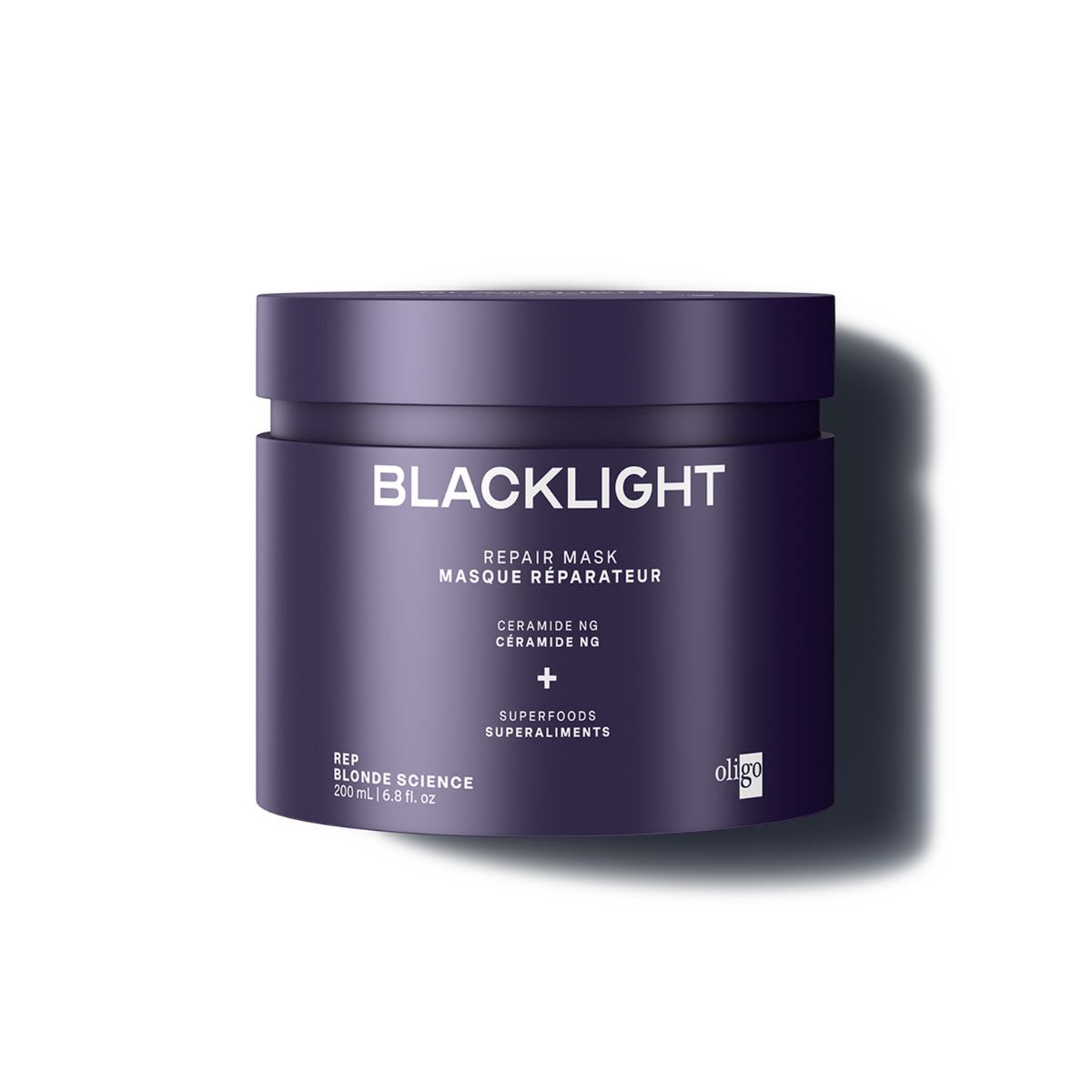
A weekly repair mask that penetrates the cortex and smooths the cuticle is the most effective way to extend how long your toning results last. Think of it as locking the door after you've refreshed the colour.

How Long Does It Take to Fix Brassy Hair?
The timeline depends on how brassy your hair currently is and how consistently you use the right products. Here's a realistic framework:
| Brassiness level | Expected timeline | Approach |
|---|---|---|
| Mild — slight warmth, hair looks dull | 1–2 washes | Toning shampoo once, left on 3–5 min |
| Moderate — noticeable yellow or orange tone | 1–2 weeks (3–4 washes) | Toning shampoo 2–3× per week |
| Significant — strong brassiness, hair looks very warm | 2–3 weeks consistent use | Toning shampoo + conditioner 3× per week + repair mask weekly |
| Severe — very orange or brassy from multiple bleach sessions | Salon toner may be needed first | At-home toning for maintenance after salon visit |
How to Stop Brassiness Coming Back
Fixing brassiness is one thing — keeping it fixed is another. Once you've corrected your tone, these habits will dramatically extend how long it stays cool between salon appointments. For a complete maintenance guide, read: How to Keep Blonde Hair Bright and Brass-Free.
Common Mistakes That Make Brassiness Worse
Avoiding these mistakes will save you time, product, and frustration:
| Mistake | Why it makes things worse | What to do instead |
|---|---|---|
| Using the wrong toning shampoo | Blue on yellow hair can turn it green; violet on orange hair does nothing | Identify your tone in natural daylight first |
| Not leaving it on long enough | Rinsing too quickly before pigment deposits — no toning effect | 3–5 minutes minimum when correcting |
| Using it too often | Over-depositing pigment can leave a purple or blue tint | 2–3× per week maximum; use hydrating shampoo on other days |
| Skipping the conditioner | Missing a second layer of toning pigment and leaving hair dry | Always follow toning shampoo with matching conditioner |
| Waiting until hair is very brassy | Correction takes longer than prevention | Start toning at your first wash after colouring |
| Continuing to use sulfate shampoo | Strips toning pigment faster than it can be replenished | Switch all washes to sulfate-free formula |
| Heat styling without protection | Opens cuticle and accelerates pigment escape | Apply heat protectant before every styling session |
Frequently Asked Questions
How do you fix brassy hair at home?
To fix brassy hair at home: identify whether your hair shows yellow tones (use violet or purple shampoo) or orange tones (use blue shampoo). Apply to wet hair, leave on 3–5 minutes, follow with matching conditioner, and seal weekly with a repair mask. For between-wash touch-ups, a neutralizing spray deposits pigment on dry hair with no rinsing needed. Most people see a visible difference after 1–3 uses of the correct product.
How long does it take to fix brassy hair with toning shampoo?
Mild brassiness can show improvement after a single wash left on 3–5 minutes. Moderate brassiness typically requires 3–4 consistent washes over 1–2 weeks. Significant brassiness from multiple bleach sessions may take 2–3 weeks of regular use. Severe cases may need a salon toner first, with at-home products used for maintenance afterward.
Can you fix brassy hair without going to the salon?
Yes. Toning shampoos, conditioners, and neutralizing sprays can effectively correct mild to moderate brassiness at home. The key is choosing the right product for your specific tone — violet for yellow, blue for orange. For severe brassiness or major colour correction, a salon visit may be needed first. At-home toning is highly effective for maintenance and prevention between appointments.
What is the fastest way to fix brassy hair?
The fastest fix is applying a toning shampoo and leaving it on for the full 3–5 minutes. For an immediate fix without washing, a neutralizing spray applied to dry hair deposits toning pigment directly and refreshes cool tone in minutes — no water needed. Both are effective the same day.
Why does my hair keep going brassy so quickly?
Hair goes brassy quickly when multiple factors are working against it: sulfate shampoos stripping colour molecules, frequent heat styling without protection, UV exposure, hard water minerals, or high porosity from bleaching. The fastest improvement comes from switching to a sulfate-free shampoo, starting toning immediately after colouring rather than waiting, and using a weekly repair mask to seal the cuticle and slow colour loss. Read the full science: Why Does Blonde Hair Turn Brassy?
Does purple shampoo fix brassy hair?
Purple shampoo (also called violet shampoo) fixes yellow brassiness in light blonde, platinum, silver, and grey hair by depositing violet pigment that cancels yellow on the colour wheel. It does not fix orange or copper brassiness — for that you need blue shampoo. Using purple shampoo on orange-toned hair will have little to no toning effect.
How do I know if I need blue or purple shampoo for brassy hair?
Check your hair in natural daylight. Yellow, golden, or straw-coloured tones — use purple or violet shampoo. Orange, copper, or warm brassy tones — use blue shampoo. If your hair shows both (common with balayage), alternate between violet and blue on different wash days. Read our full guide: Blue vs Violet Shampoo: What's the Difference?
Can I fix brassy hair the same day?
Yes, for mild to moderate brassiness. Apply the correct toning shampoo and leave on for 3–5 minutes for an immediate result. For the fastest fix on dry hair, a neutralizing spray applied directly to warm sections delivers visible toning in minutes with no washing needed.
Fix Brassy Hair — Starting Today
Shop violet and blue toning shampoos, conditioners, neutralizing sprays, and repair masks — all formulated with science-led blonde hair care. Made in Quebec.
Shop Toning Products Try a Mini First (60ml)Read more
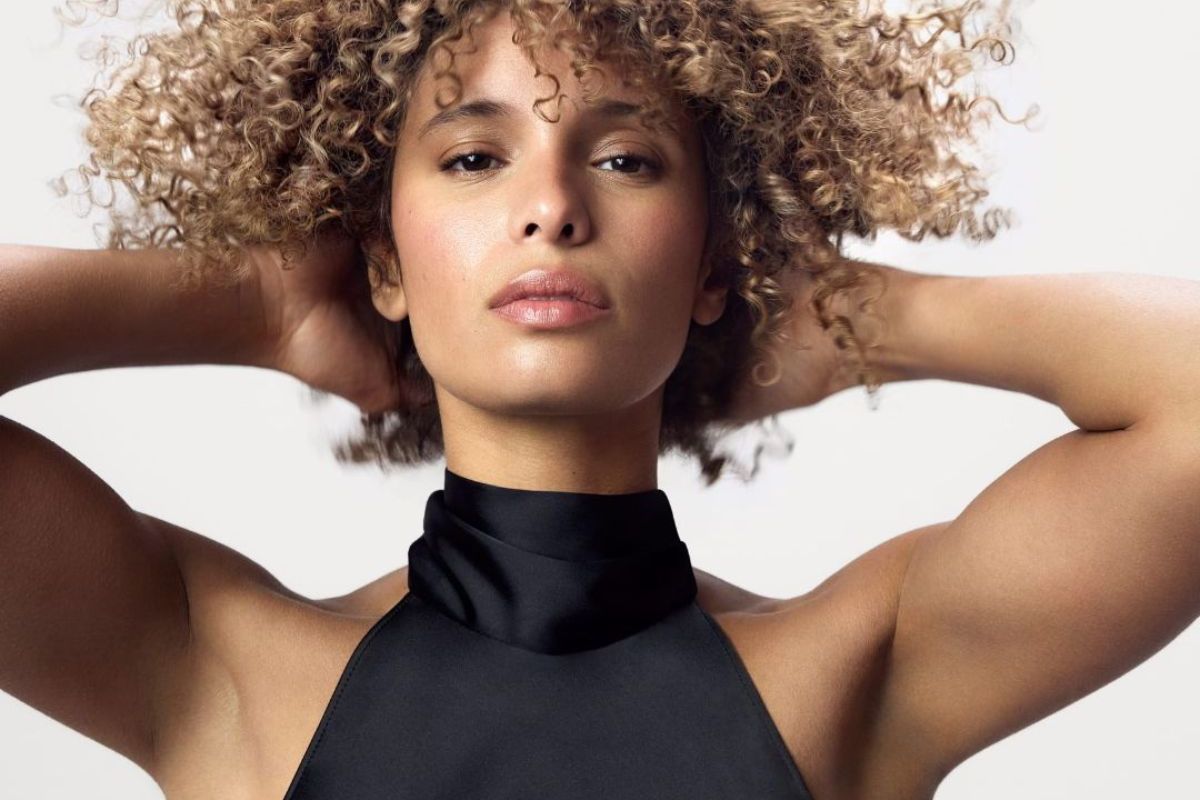
Brassy hair isn't random — it's chemistry. When hair is lightened, the blue pigment molecules, the smallest and most fragile, fade out first. Once they're gone, the warm yellow and orange pigments ...
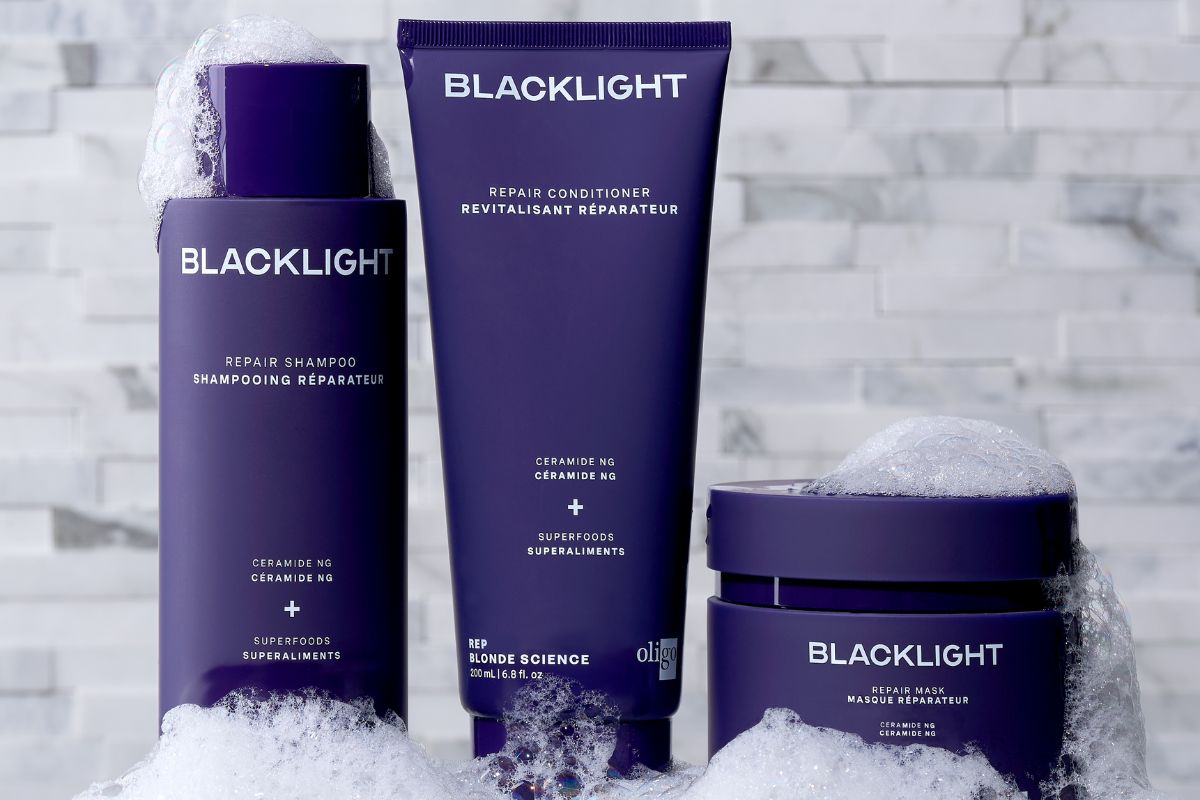
Toning your hair at home doesn't require a salon visit or box dye. Learn exactly which toning product to use for your brassiness type, how long to leave it on, and how to make your results last — s...

Discover Your Ideal Haircare Routine
Answer a few quick questions to get your personalized routine (and receive a gift!).