

Why Does Blonde Hair Turn Brassy? The Science Explained
Blonde hair turns brassy because blue pigment molecules — the ones that keep hair looking cool and ash-toned — are the smallest in the hair shaft and fade the fastest. Once they're gone, the warmer yellow and orange pigments are left behind, creating that characteristic brassy tone. UV exposure, hard water minerals, sulfate shampoos, heat styling, and chlorine all accelerate this process by opening the hair cuticle and stripping color molecules faster.
First: how hair color actually works
To understand brassiness, you need to understand the two types of melanin — the natural pigment that gives your hair its color. Both are produced by cells called melanocytes at the base of each hair follicle and are deposited directly into the growing hair shaft.
| Melanin type | Colors it produces | Found in |
|---|---|---|
| Eumelanin | Brown and black tones | Dark brown, black, and dark blonde hair |
| Pheomelanin | Red, orange, and yellow tones | Blonde and red hair — the warm pigments |
Blonde hair naturally contains very little eumelanin and a higher ratio of pheomelanin. This is why blonde hair has that characteristic warmth — and it's also why it becomes brassy so easily. The warm pigments are already there, sitting in the hair shaft, waiting to become visible the moment the cooler tones fade or are removed.
What bleaching does to the hair shaft
Bleaching is an oxidation reaction. The bleaching agent — typically hydrogen peroxide mixed with a lightening powder — penetrates the hair cuticle and enters the cortex, where it oxidizes (breaks down) melanin molecules. The process unfolds in stages:
- The alkaline agent (ammonia) swells and opens the hair cuticle, allowing the bleaching chemicals to enter the cortex.
- Hydrogen peroxide oxidizes the melanin inside the cortex, breaking the pigment molecules apart and diluting color.
- Eumelanin (dark pigment) breaks down first, lifting hair from black or brown toward red, then orange, then yellow.
- Pheomelanin (warm pigment) is more resistant and is the last to lift — which is why pale yellow is the final stage before white-blonde.
- A toner is applied to deposit cool pigment (blue, violet, or ash tones) on top of the lifted hair, neutralizing whatever warm tones remain.
Here's the critical part that explains everything about brassiness: the toner is a deposit sitting on and in the hair shaft. It does not permanently change the underlying warm pigment. It neutralizes it. The moment that toner fades — and it always fades — the warm undertones return.

Bleaching opens the door to brassiness — a sealed, well-maintained cuticle is the first line of defense.
Why blue pigment fades first (and why that matters)
This is the most important piece of the brassiness puzzle, and it comes down to molecular size.
Hair color — whether deposited by a toner, a dye, or a toning shampoo — is made up of three primary pigment molecules: blue, red, and yellow. These molecules are not all the same size. Blue pigment molecules are significantly smaller than red and yellow molecules. That size difference has one major consequence: blue molecules sit less securely within the hair cortex and wash out faster with every shampoo.
As blue pigments leave the hair shaft first, the color balance shifts. The remaining red and yellow pigments — which are larger, more stable, and slower to fade — become increasingly dominant. The result is a gradual warming of the hair's tone from cool ash-blonde toward brassy yellow, then brassy orange.
The 6 things that make brassiness worse
Beyond the natural fading of color molecules, six external factors significantly accelerate brassiness. Understanding which ones affect you most tells you where to focus your prevention routine.
Does hair porosity affect brassiness?
Yes — and it's one of the most underappreciated factors in how quickly blonde hair turns brassy. Hair porosity refers to how easily your hair absorbs and retains moisture and color molecules. It is determined by the condition of your cuticle layer — the outermost scale-like layer of the hair shaft that opens and closes to regulate what enters and exits.
There are three porosity levels, each with a very different relationship to brassiness:
| Porosity level | Cuticle condition | Effect on brassiness |
|---|---|---|
| Low porosity | Tightly closed, smooth cuticle | Slow to absorb toner — but also slow to lose it. Brassiness develops gradually. Hard to penetrate with toning products; leave-on time matters more. |
| Medium porosity | Slightly raised cuticle | Absorbs and retains toner well. Most predictable results from toning shampoos. Balanced brassiness timeline. |
| High porosity | Raised, uneven, or damaged cuticle | Absorbs toner quickly but loses it just as fast. Brassiness returns faster. Common in bleached, chemically processed, or heat-damaged hair. |
The practical implication: if your hair is highly porous (bleached, heat-damaged, or chemically processed), sealing the cuticle between toning sessions is just as important as the toning itself. A weekly repair mask that smooths and closes the cuticle directly extends how long your cool tone lasts.
Bleached vs highlighted vs naturally blonde hair: how brassiness differs
Not all blonde hair behaves the same way — and the type of lightening process you've had (or haven't had) significantly changes how quickly brassiness appears, what shade it turns, and what products will work best for you.
How quickly does brassiness appear?
The timeline varies, but here's a realistic framework based on the key factors above:
The color theory behind toning shampoos
Toning shampoos work on a simple principle from color theory: pigments on opposite sides of the color wheel cancel each other out when combined. This is the same principle your colorist uses when applying toner after bleaching.
| Brassy tone in hair | Neutralizing color | Shampoo to use | Best for |
|---|---|---|---|
| Yellow tones | Purple / violet | Purple or violet shampoo | Light blonde, platinum, silver, gray, highlighted hair |
| Orange tones | Blue | Blue shampoo | Dark blonde, brunette with warm highlights, bronde |
| Mixed yellow & light orange | Violet (broader spectrum) | Violet shampoo | Balayage, highlighted blonde, most lightened hair types |

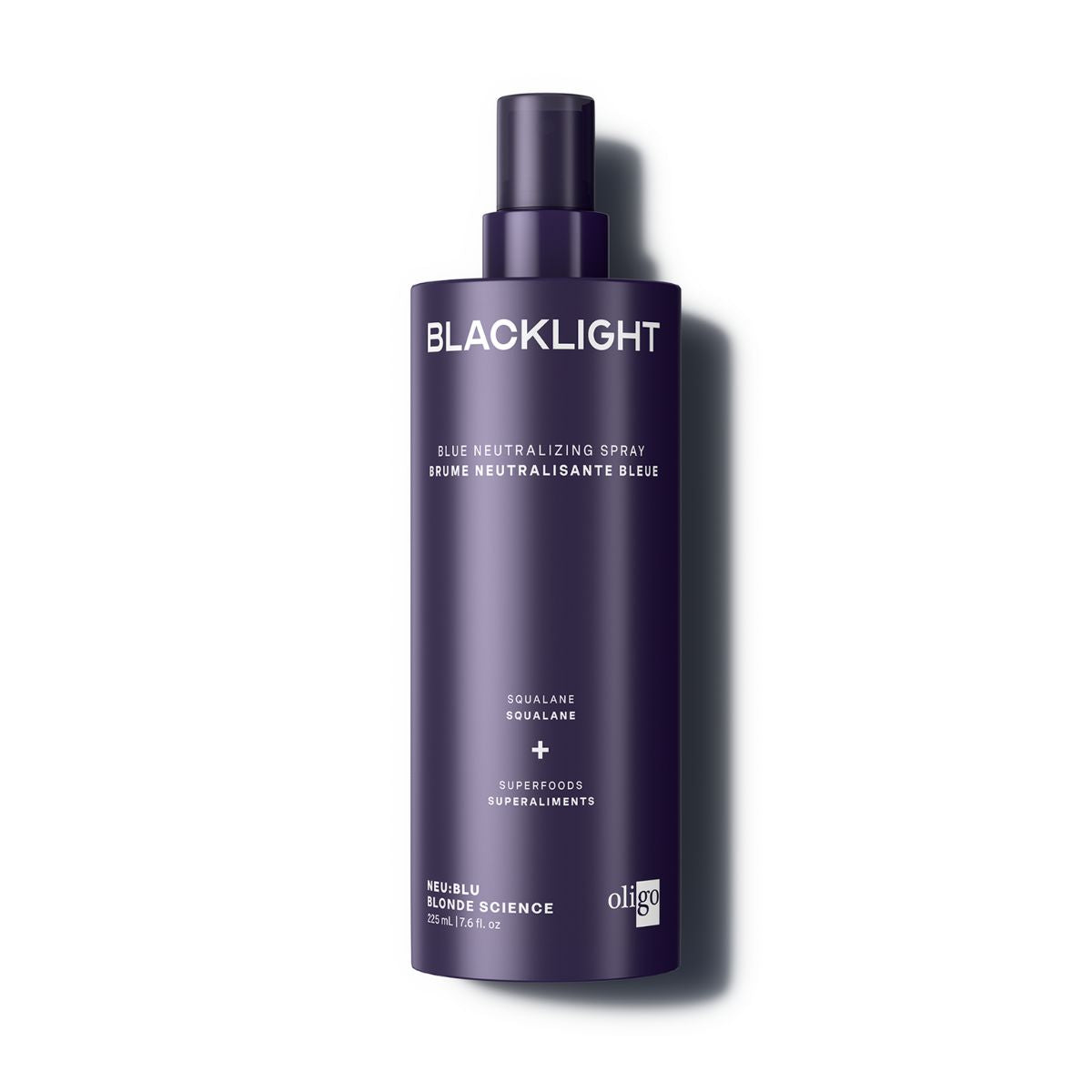
The Blue Neutralizing Spray — a targeted toning tool for on-the-go brassiness control.
How to prevent and neutralize brassiness

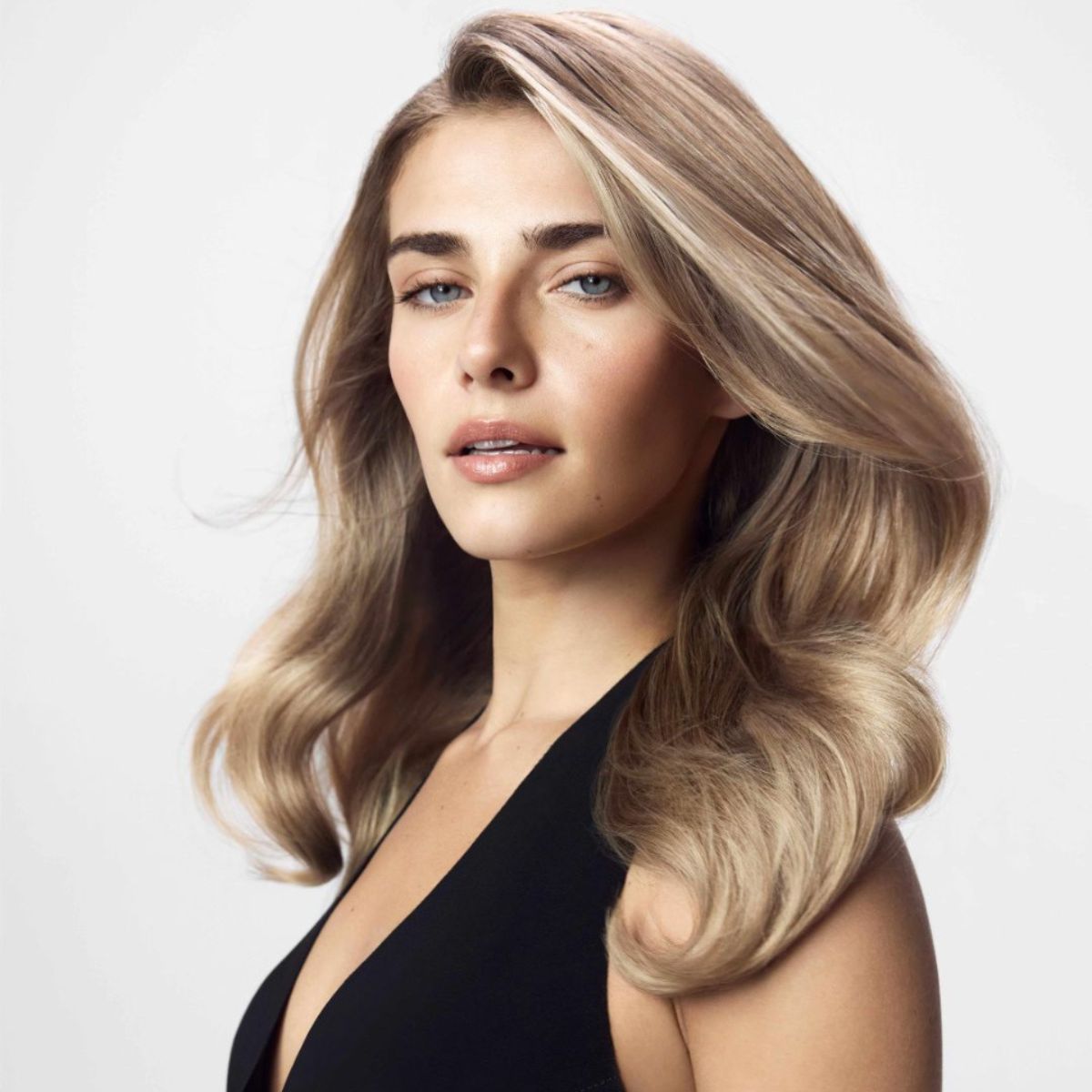
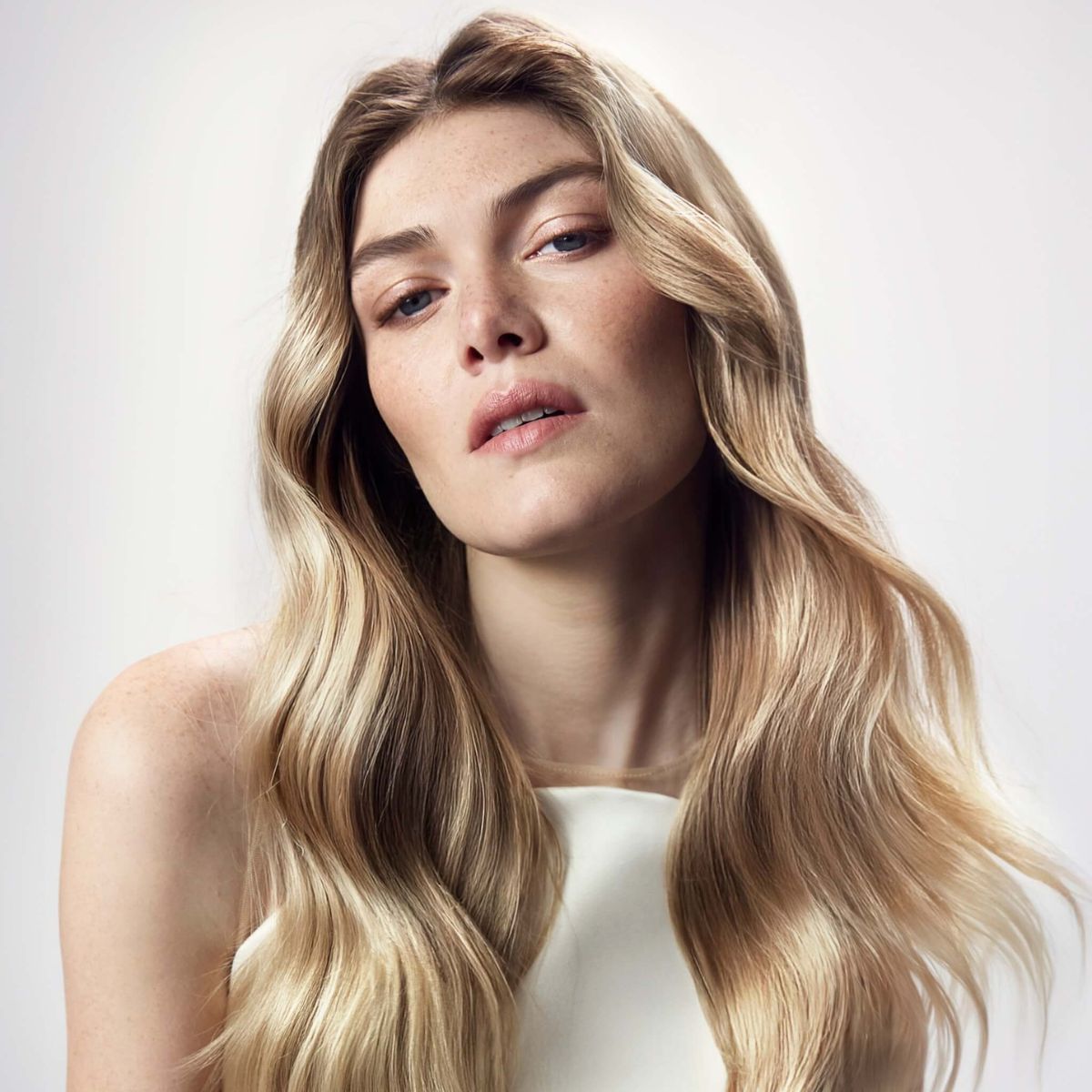
Vibrant, cool-toned blonde maintained with regular toning and repair — no salon visit required.
Armed with the science, here's what actually works — in order of impact:
1. Start toning immediately after coloring
Don't wait for brassiness to appear. Begin your toning shampoo routine at your very first post-color wash. This keeps blue and violet pigment levels consistently topped up, slowing the warm-tone reveal significantly.

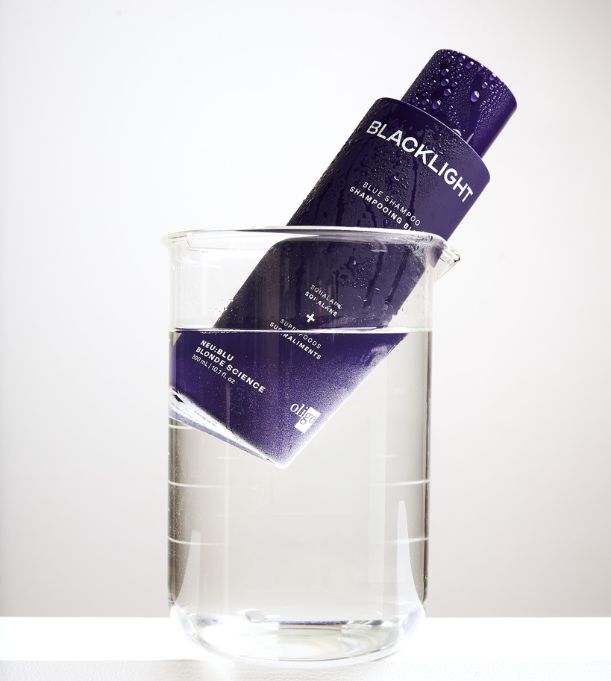
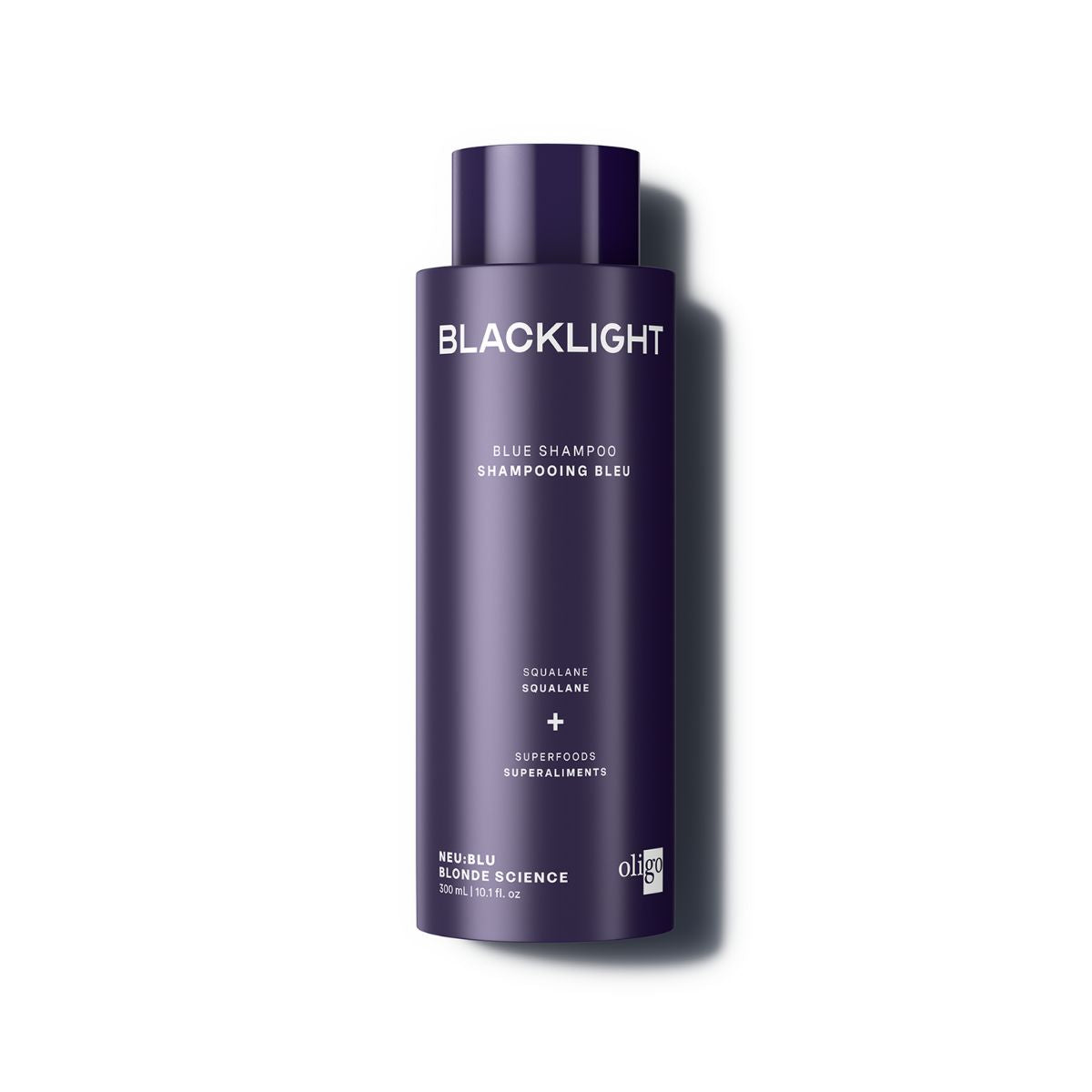
Blacklight Blonde Science Blue Shampoo
- Deposits blue pigment to neutralize orange and warm brassy tones
- Best for: dark blonde, bronde, highlighted brunette, and warm-toned lightened hair
- Use 1–3 times per week, leave on 2–5 minutes
- Sulfate-free — cleanses without stripping additional color molecules
2. Match your shampoo to your brassiness type
Not all brassiness is the same. Yellow brassiness and orange brassiness require different neutralizing pigments. Using the wrong one is ineffective — using blue shampoo on yellow hair, for instance, can actually make hair look greenish. Identifying whether your hair pulls yellow or orange is the single most important step in choosing the right toning product.
3. Switch to sulfate-free formulas for every wash
Sulfates are the fastest route to brassiness outside of UV exposure. Switching your everyday shampoo to a sulfate-free formula significantly reduces the amount of color stripped from the hair shaft per wash — extending the life of both your salon color and your toning shampoo's effects.
4. Protect hair from UV and heat
UV protection for hair is not a luxury — it's essential maintenance for any lightened or colored blonde. A heat protectant before every hot tool session is equally important, as the cuticle-opening effect of heat is one of the primary mechanisms through which color escapes the hair shaft.
5. Address hard water if it applies to you
If you live in an area with hard water, mineral buildup is working against your color regardless of what products you use. A clarifying treatment used once per month helps remove mineral deposits from the hair shaft, allowing toning products to work more effectively on clean, unobstructed hair.
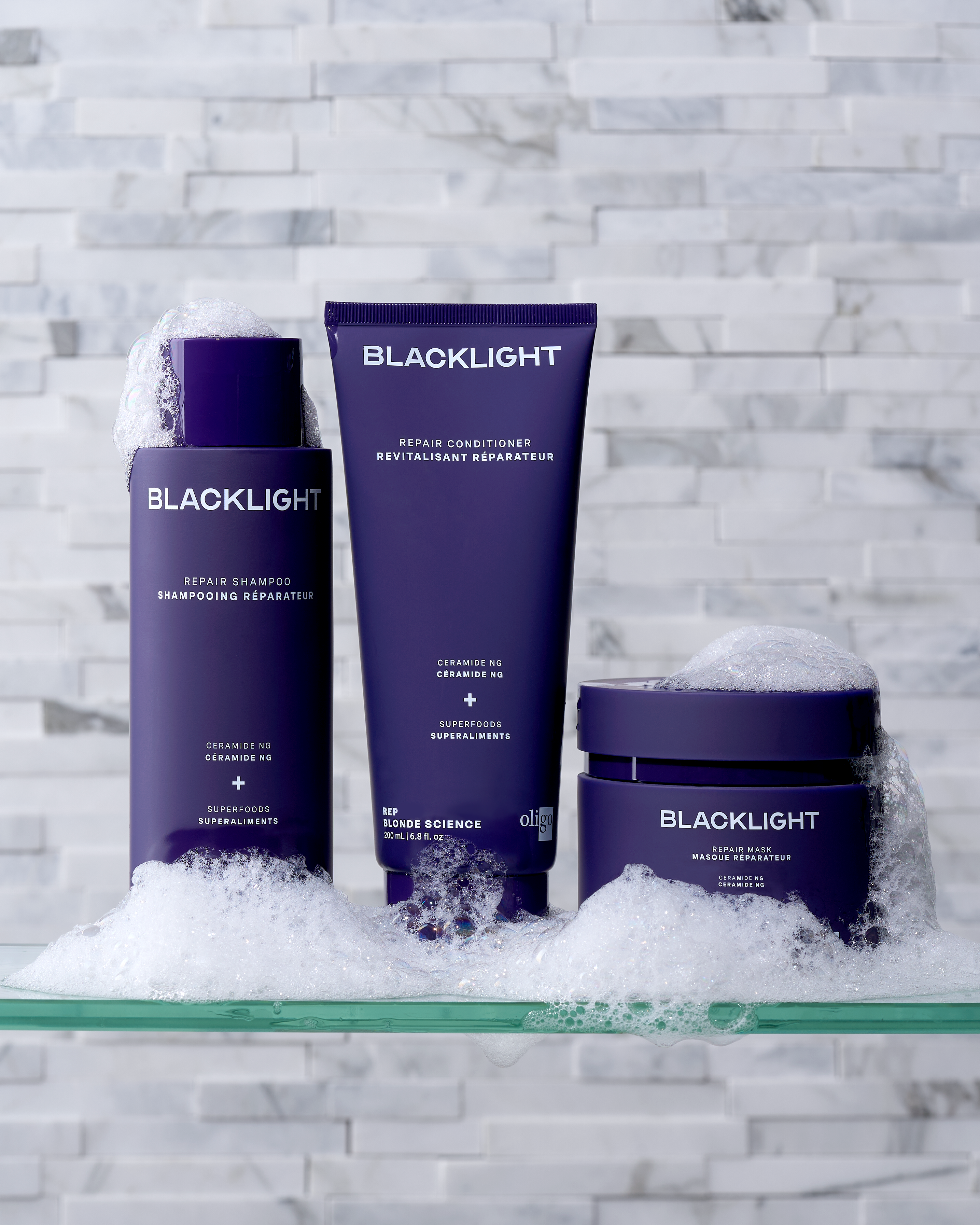
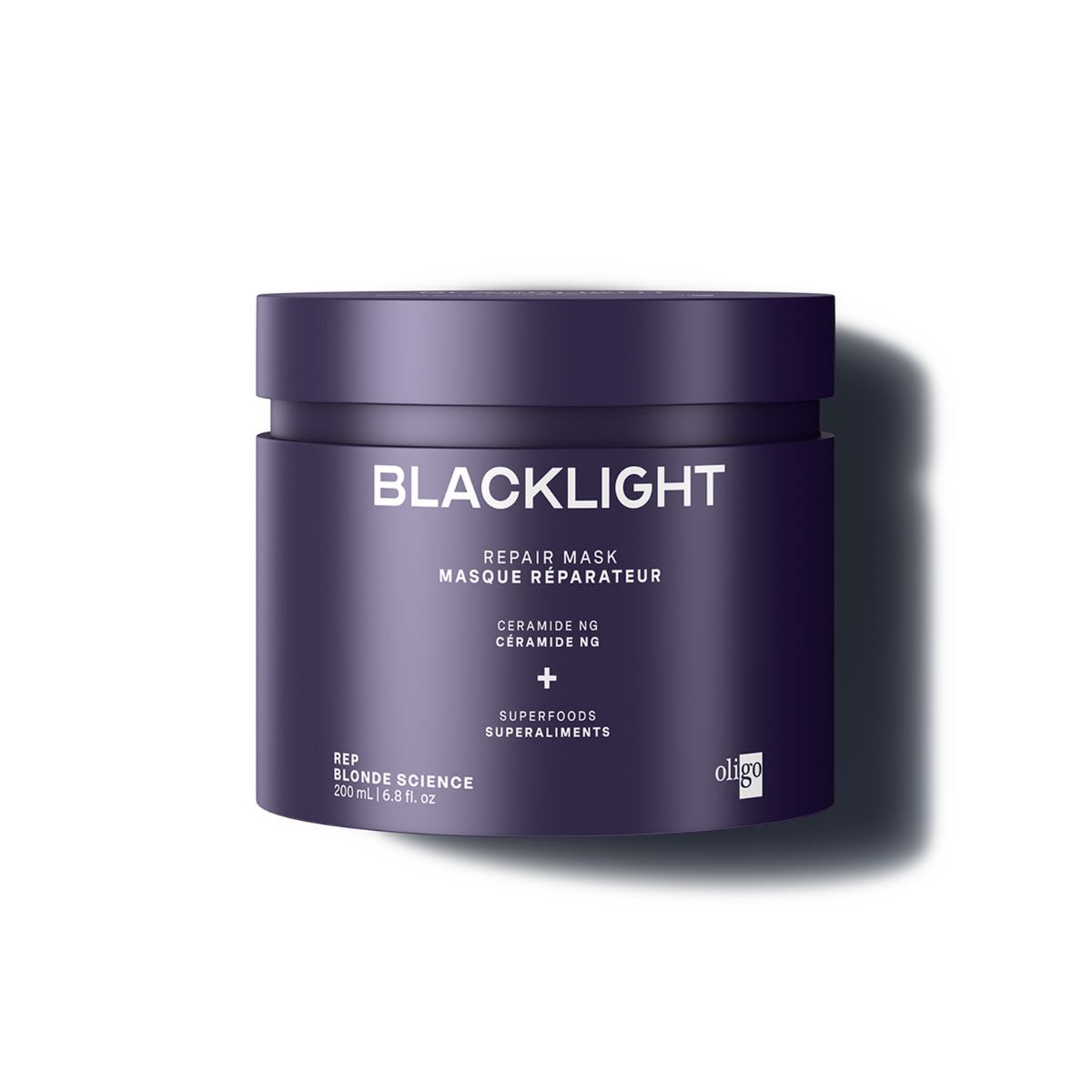
6. Use a repair mask weekly to seal the cuticle
A sealed, smooth cuticle retains pigment significantly better than a raised, porous one. Regular deep conditioning with a repair mask — especially formulated for bleached or lightened hair — helps close the cuticle and lock in the color molecules that toning deposits.

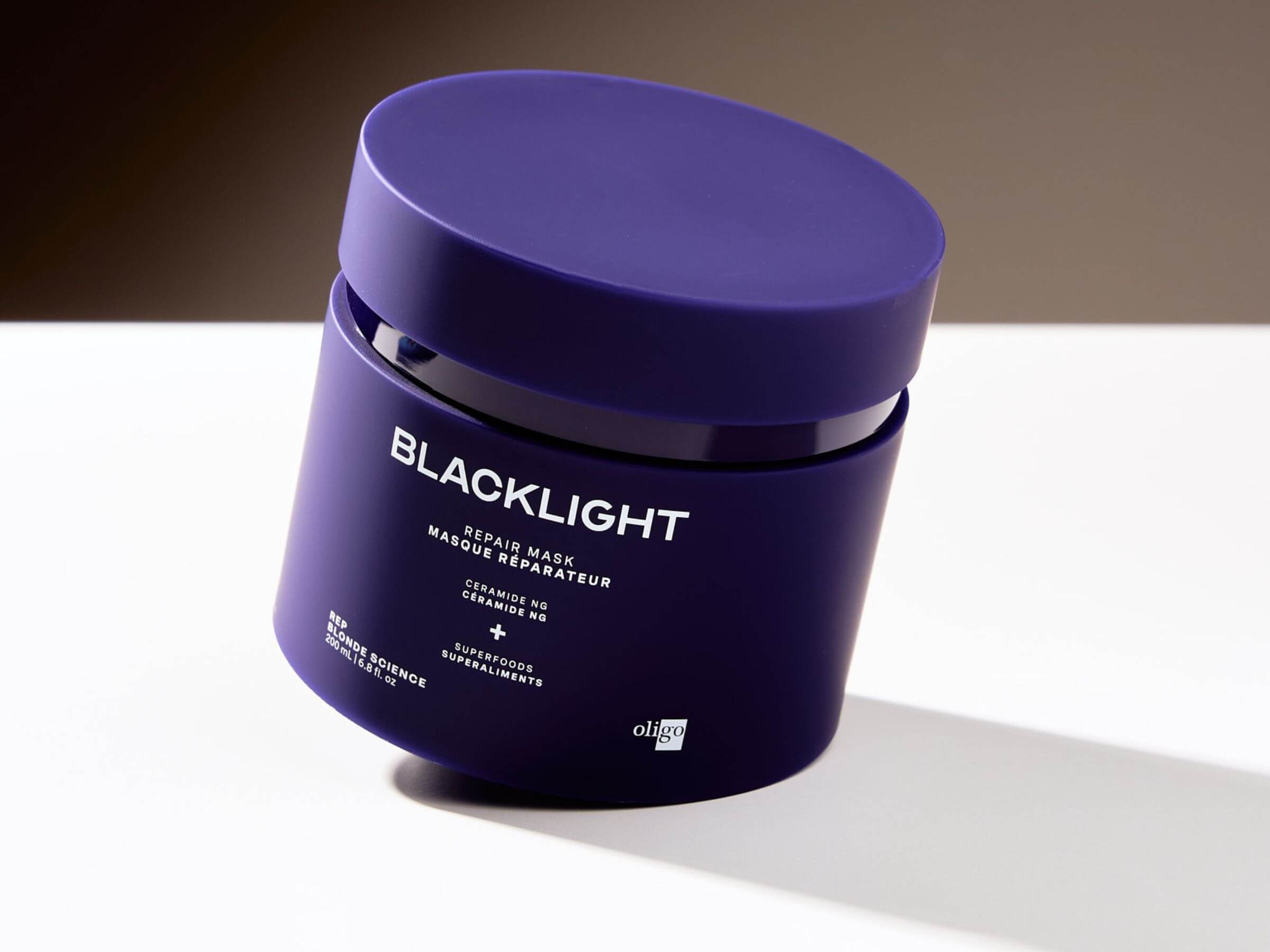
Blacklight Blonde Science Repair Mask
- Penetrates the cortex to reinforce and smooth the hair structure
- Seals the cuticle — slowing pigment loss between toning shampoo uses
- Restores elasticity and softness to bleach-damaged strands
- Use weekly on clean, towel-dried hair — leave on 5–10 minutes
- Color-safe and formulated specifically for lightened blonde hair
Frequently asked questions
Why does blonde hair turn brassy?
Blonde hair turns brassy because of how pigment molecules behave inside the hair shaft. Blue pigment molecules — the ones that keep hair looking cool and ash-toned — are the smallest and most fragile. They fade and wash out first. Once the blue molecules are gone, only the warm yellow and orange pigments remain, creating the characteristic brassy tone. This process is accelerated by UV exposure, hard water minerals, heat styling, sulfates, and chlorine.
What causes brassiness in blonde hair?
Brassiness is caused by: (1) underlying warm pigments (yellow, orange) being exposed when bleaching doesn't fully remove them; (2) blue color molecules fading faster than warm ones; (3) UV rays oxidizing and breaking down hair color molecules; (4) hard water minerals depositing on the hair shaft; (5) sulfate shampoos stripping protective oils and color; (6) heat styling opening the cuticle and accelerating pigment loss; (7) chlorine oxidizing and discoloring lightened strands.
Why do blue pigments fade faster than yellow and orange in hair dye?
Blue pigment molecules are smaller in size than yellow and orange molecules. Because they are smaller, they sit less securely within the hair's cortex and are more easily washed out with each shampoo. This means that the blue tones keeping hair cool-toned and ash-blonde fade first, gradually revealing the warmer undertones underneath — which is what we see as brassiness.
Does hard water cause brassy hair?
Yes. Hard water contains elevated levels of minerals including calcium, magnesium, iron, and copper. These minerals deposit onto the hair shaft with every wash, building up over time. Iron and copper in particular can directly alter the tone of blonde hair, adding yellow, orange, or even green hues. The mineral buildup also raises the hair cuticle, making hair more porous and more vulnerable to color fading and brassiness.
Does the sun make blonde hair brassy?
Yes. UV rays break down color molecules in hair through photooxidation. Blue pigment molecules — already the most fragile — are especially vulnerable to UV damage. Sun exposure also raises the hair cuticle, allowing pigment to escape more easily. This is why blonde hair often looks noticeably more brassy after summer, even without additional chemical processing.
How do you neutralize brassy tones in blonde hair?
Brassy tones are neutralized using color theory: pigments on opposite sides of the color wheel cancel each other out. Purple and violet pigments neutralize yellow tones — why purple or violet shampoo works for blondes. Blue pigments neutralize orange and red tones — why blue shampoo is used for darker blonde or brunette hair with warm undertones. Regular use of the correct toning shampoo 1–3 times per week is the most effective at-home way to manage brassiness.
Does heat styling make hair more brassy?
Yes. Heat from flat irons, curling wands, and blow dryers opens the hair cuticle, allowing color molecules — especially the small blue ones — to escape more easily. Heat also damages the cortex over time, making hair more porous and more prone to color fading. Using a heat protectant before styling creates a barrier that slows this process by helping the cuticle stay closed during heat exposure.
How long until blonde hair turns brassy?
Most people notice brassiness within 2–6 weeks after coloring or lightening. The timeline depends on hair porosity, wash frequency, water quality, sun exposure, and the products used. Starting a toning shampoo routine immediately after coloring — rather than waiting for brassiness to appear — is the most effective way to significantly extend how long blonde hair stays cool and vibrant.
Does hair porosity affect brassiness?
Yes. High porosity hair — common after bleaching or heat damage — has a raised cuticle that loses toning pigment faster, causing brassiness to return more quickly. Low porosity hair retains toner longer but absorbs it more slowly. Sealing the cuticle with a weekly repair mask is the most effective way to extend how long toning results last in high porosity hair.
Does bleached hair go brassy faster than highlighted hair?
Yes. Fully bleached hair has higher porosity than highlighted hair because the entire shaft has been chemically processed. Higher porosity means toner absorbs faster but also fades faster — so brassiness returns more quickly. Highlighted or balayage hair only has lifted sections, which behave like high porosity hair while the natural sections remain more stable. Both benefit from a regular toning shampoo routine, but fully bleached hair typically needs more frequent toning.
Stop brassiness before it starts
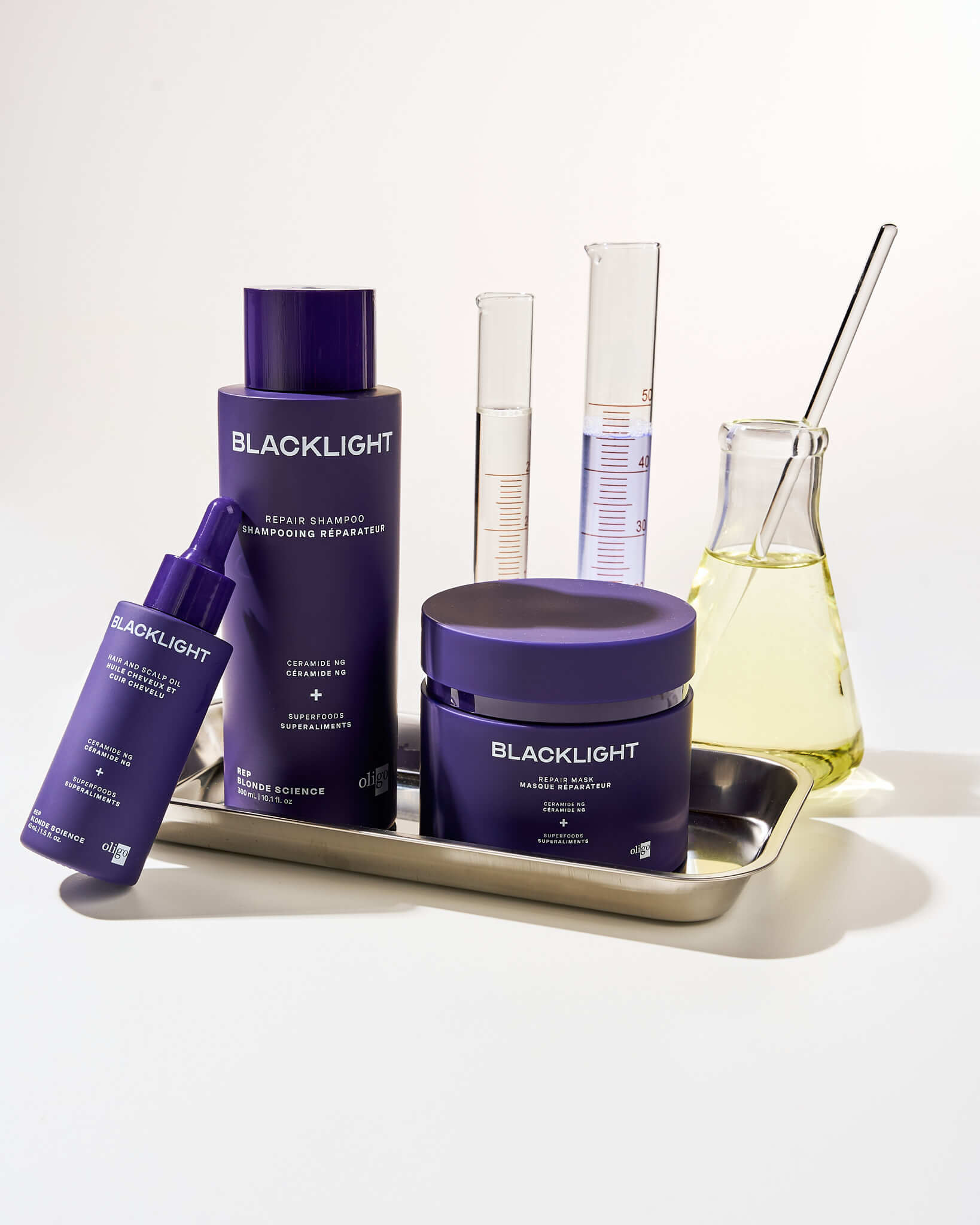
Blacklight Blonde Science formulates every product around the science of blonde hair — color theory, pigment chemistry, and cuticle health. Built for blondes who want to understand their hair, not just manage it.
Shop toning shampoos Shop all productsRead more
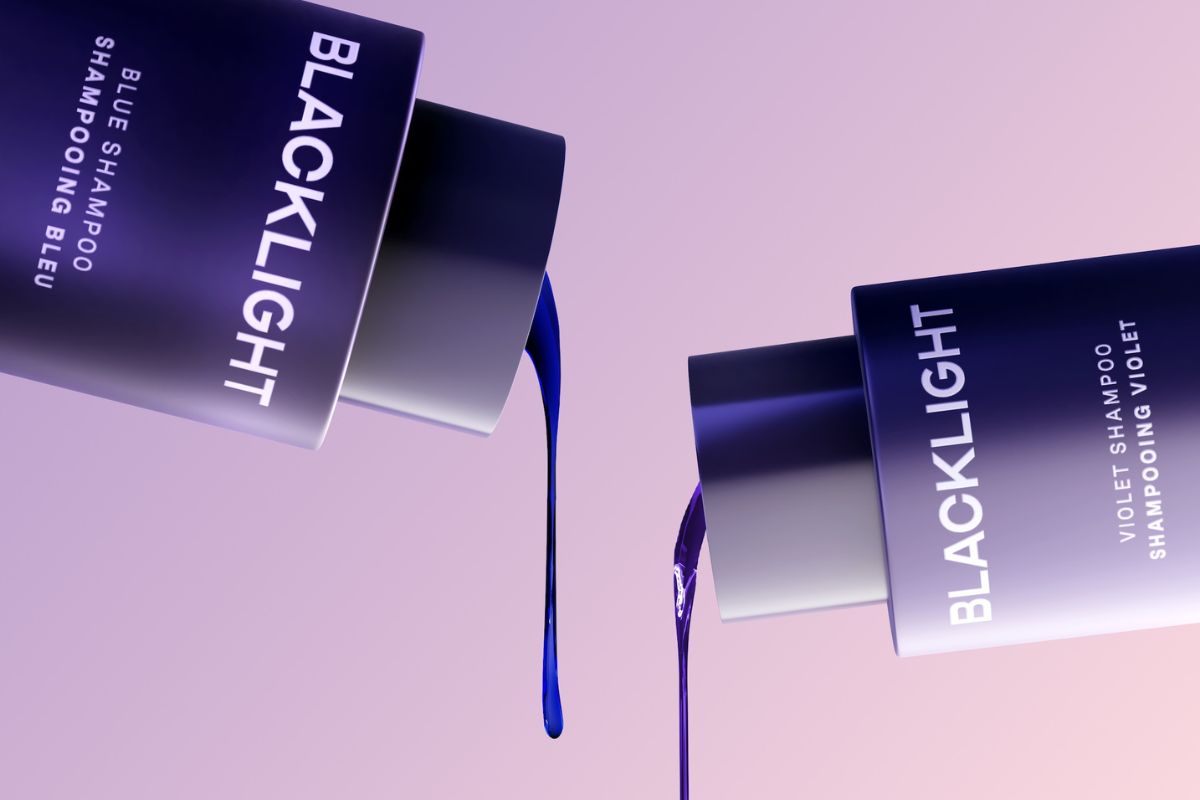
Not sure if you need a violet shampoo or a blue shampoo? Learn the key differences, when to use each, and how to keep blonde hair bright, cool, and brass-free.
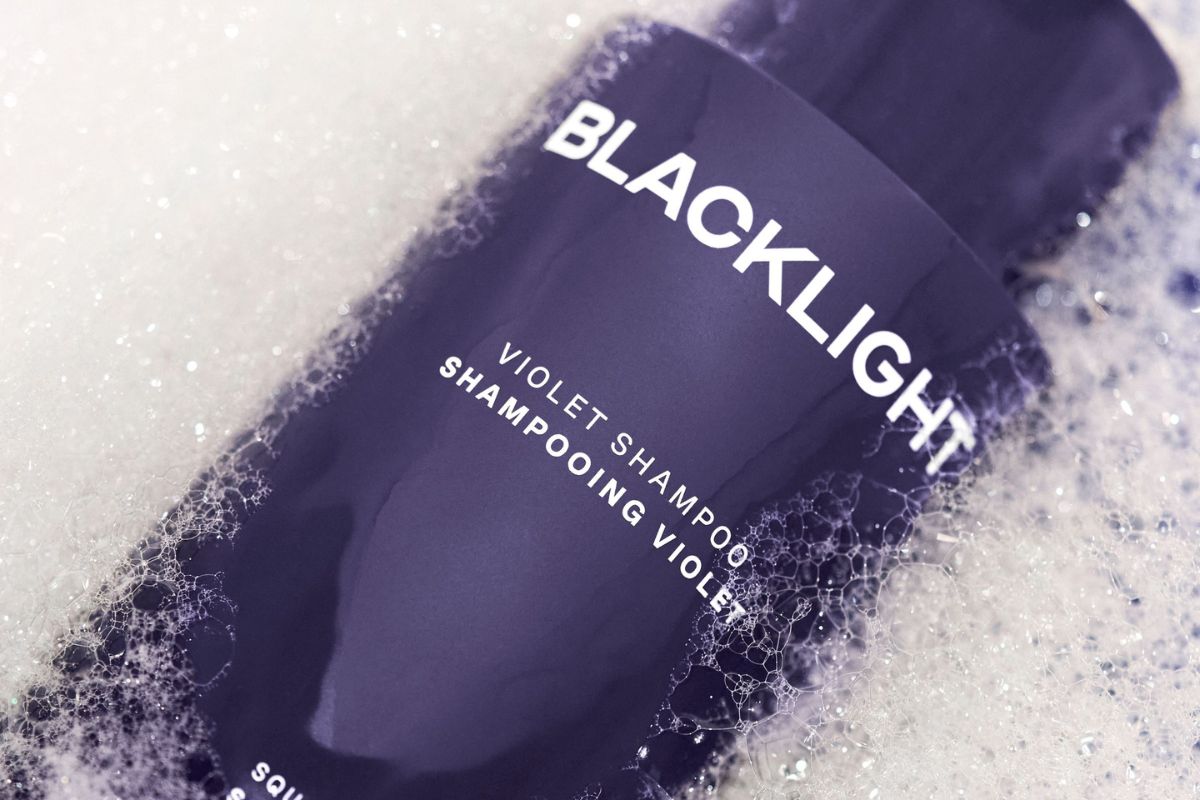
Brassy hair isn't a colour mistake — it's chemistry, and it's fixable. Learn exactly how to identify your brassiness type, which toning shampoo to use, how fast to expect results, and how to keep i...

Discover Your Ideal Haircare Routine
Answer a few quick questions to get your personalized routine (and receive a gift!).