


How Often Should You Use Purple Shampoo? The Complete Guide
Use purple shampoo 2–3 times per week when correcting active yellow brassiness, leaving it on for 3–5 minutes each session. Once your tone is where you want it, drop to 1–2 times per week to maintain. Use a plain sulfate-free shampoo on all other wash days. Never use purple shampoo every day — it will over-deposit and dry hair out.
Why Frequency Matters: How Purple Shampoo Actually Deposits Pigment
Purple shampoo works by depositing small amounts of violet pigment onto the outer layer of the hair shaft with each wash. Violet sits opposite yellow on the colour wheel — when the two are combined in the right proportion, they cancel each other out and the result is a cooler, more neutral, or brighter blonde tone.
The key phrase is small amounts with each wash. Unlike a salon toner — which saturates the hair cortex with dye in a single application — purple shampoo is a cumulative product. One wash deposits a thin layer of pigment. Three washes deposit three layers. This is why consistency over time matters far more than any single long application.
This deposit-and-fade dynamic also explains why the right frequency is different depending on whether you're currently correcting brassiness or simply maintaining a tone you've already achieved. The two phases require a meaningfully different approach.
If You Have Active Brassiness: The Correcting Phase (2–3× Per Week)
If your hair currently looks yellow, straw-toned, or "brassy blonde," you're in the correcting phase. Your goal is to build up enough violet deposit to visibly neutralize the warmth you can see — and that requires consistency over 1–2 weeks, not one long single session.
Correcting phase protocol:
- Frequency: Use violet shampoo 2–3 times per week
- Leave-on time: 3–5 minutes per session (set a timer — this is the most skipped step)
- Other wash days: Use a plain sulfate-free shampoo to cleanse without stripping the pigment you just deposited
- Always follow with: Violet conditioner — it adds a second layer of toning pigment while hydrating bleach-damaged hair
- Duration: Most people see a clear improvement after 3–5 sessions; full correction of significant brassiness typically takes 1–2 weeks of consistent use
See how to use purple shampoo the right way.


Once Tone Is Corrected: The Maintenance Phase (1–2× Per Week)
Once your hair looks the way you want it — cool, bright, no visible yellow — you've entered the maintenance phase. This is where most people make a second mistake: they keep using purple shampoo at the same correcting frequency. The result is gradual over-deposit, and hair that starts to look ashy, dull, or faintly lavender.
In the maintenance phase, your goal shifts. You're no longer trying to build up new deposit — you're replacing the small amount of violet pigment that fades between washes. This requires less product contact time and lower frequency.
Maintenance phase protocol:
- Frequency: 1–2 times per week
- Leave-on time: 1–3 minutes is enough to replenish a maintenance-level deposit
- Other wash days: Continue using a plain sulfate-free shampoo — not a regular sulfate-based formula, which will strip your deposit faster than you can replace it
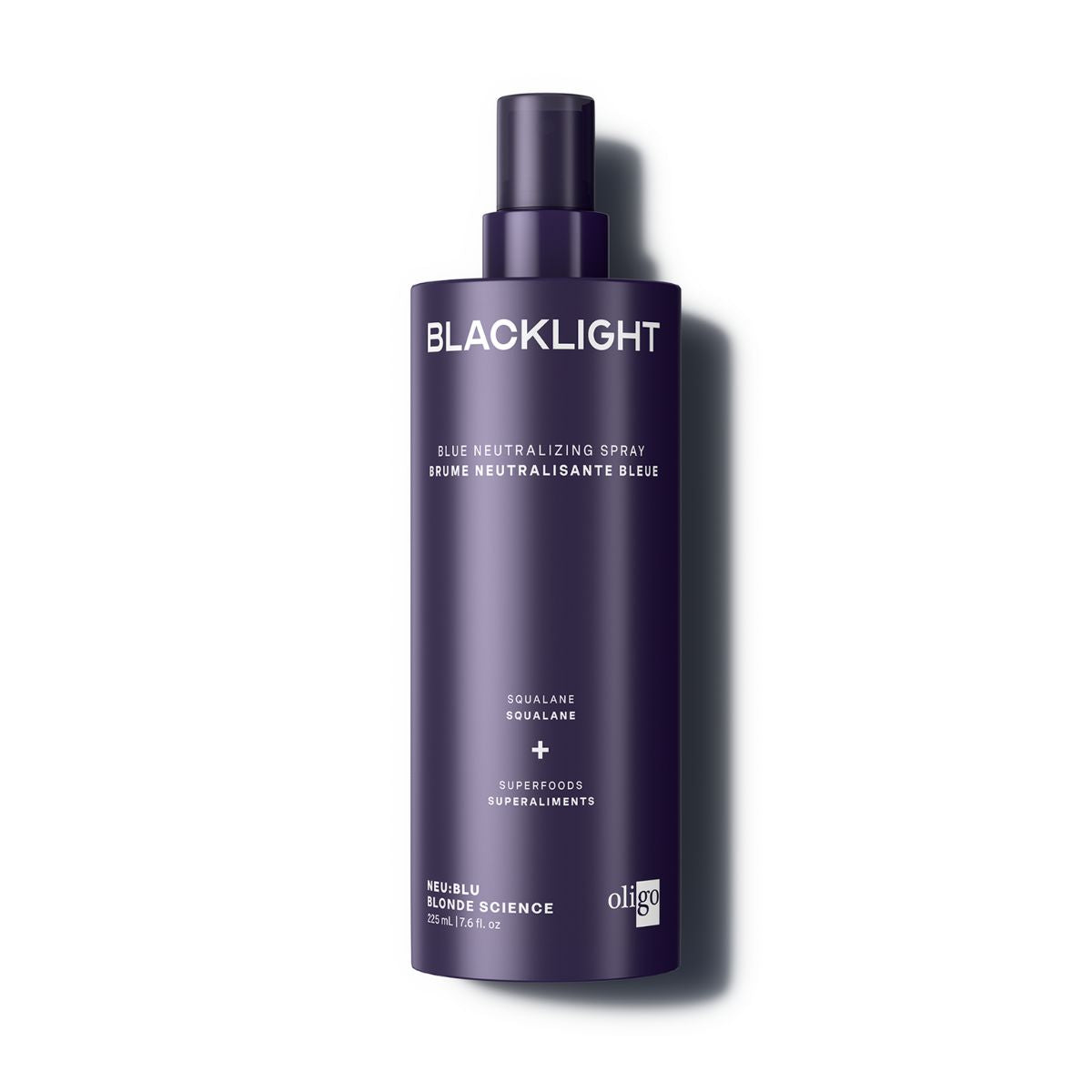
- Between washes: Use a violet neutralizing spray to top up tone without a full wash — this is the most effective way to keep hair looking consistently cool between shampoo days
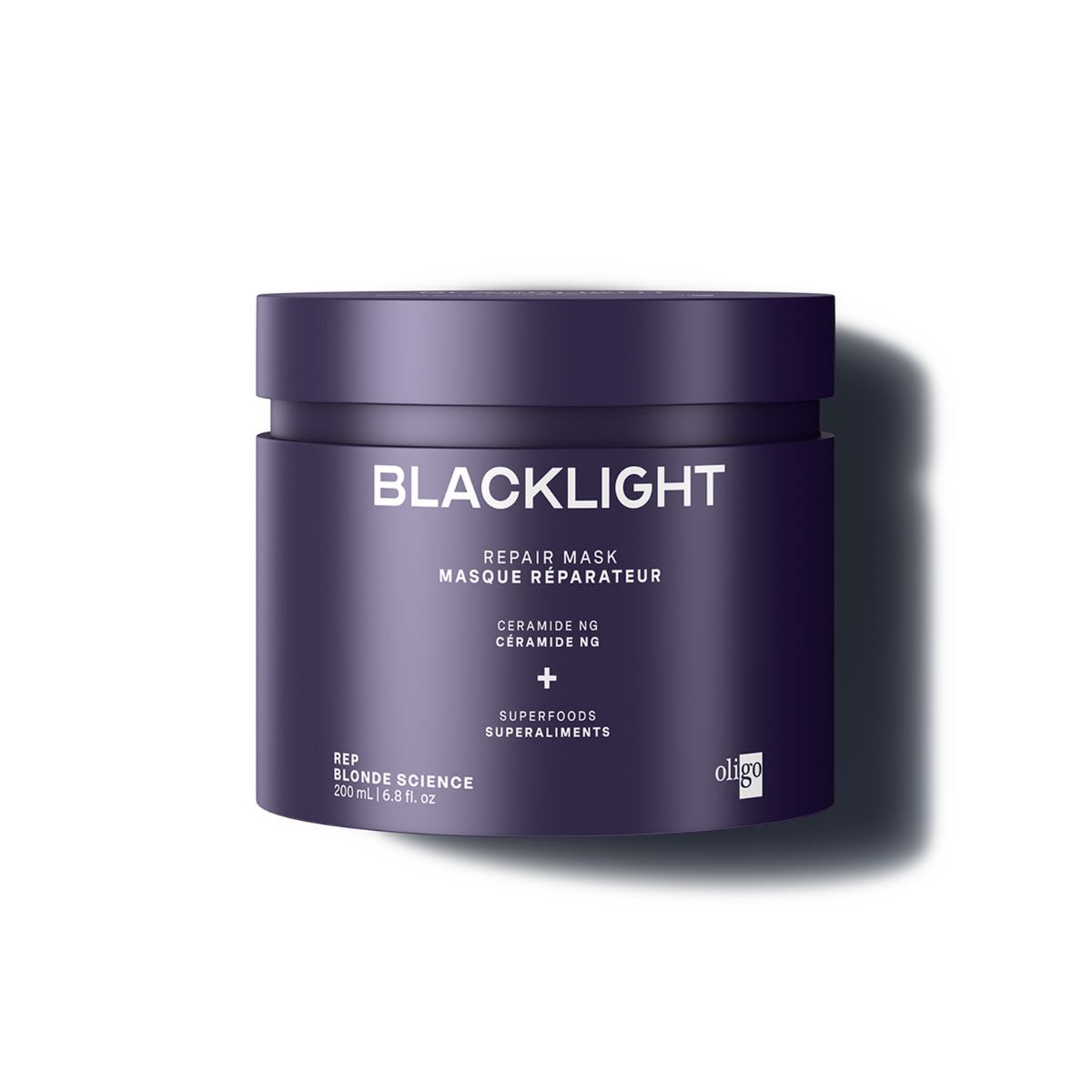
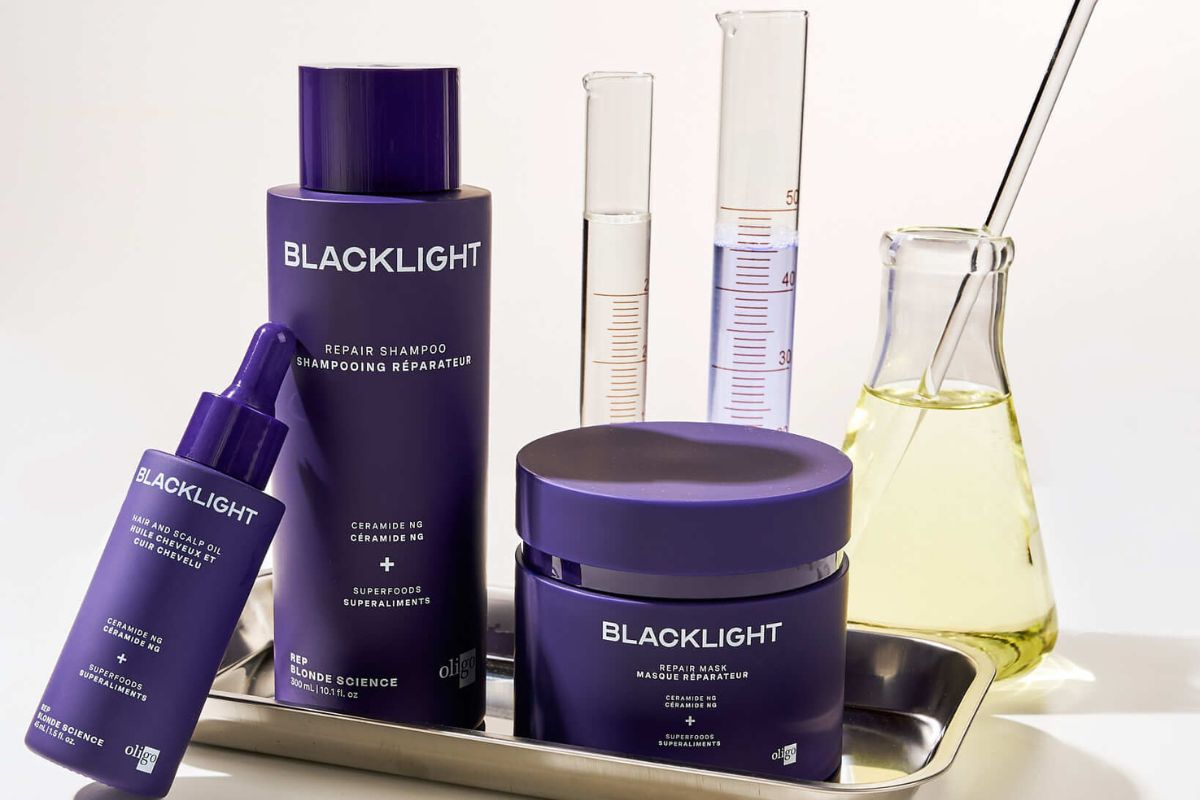
- Weekly: Use a repair mask to seal the cuticle, slow colour loss, and keep bleach-damaged hair structurally healthy enough to hold pigment longer
A Sample Weekly Wash Schedule
Below is a practical, easy-to-follow weekly schedule for someone who washes their hair 3–4 times per week. Adjust the days to match your own wash routine — the structure is what matters, not the specific days.
Correcting phase (weeks 1–2, washing 3× per week):
Maintenance phase (from week 3 onward):

How Long to Leave Purple Shampoo On
Leave-on time and frequency work together — they are not interchangeable. Leaving purple shampoo on for longer does not compensate for using it less often, and using it more often does not compensate for rinsing it too quickly. Both variables matter.
| Situation | Recommended leave-on time | Notes |
|---|---|---|
| Correcting visible yellow brassiness | 3–5 minutes | Set a timer — most people rinse far too early |
| Maintenance (tone already correct) | 1–3 minutes | Refreshes deposit without over-depositing |
| Very porous or heavily bleached hair | Start at 2 minutes, increase gradually | High-porosity hair absorbs pigment faster |
| Fine or low-porosity hair | 3–5 minutes (correcting), 2–3 minutes (maintenance) | Pigment absorbs more slowly — full contact time needed |
| Maximum safe time | 10 minutes | Beyond this, risk of visible lavender tint increases significantly |
What Happens If You Use Purple Shampoo Too Often
Over-using purple shampoo is one of the most common mistakes in blonde hair care — and it produces results that are easy to mistake for the wrong product or a bad formula. If your hair looks dull, ashy-grey, or faintly purple, the problem is almost certainly frequency, not the product.
| Sign of overuse | What's happening | How to fix it |
|---|---|---|
| Hair looks lavender or purple-tinged | Violet pigment has built up faster than it's fading | One wash with a gentle clarifying shampoo — the tint is not permanent |
| Hair looks ashy, grey, or flat | Over-depositing is cancelling more yellow than present, shifting tone too cool | Switch to maintenance frequency (1–2× per week, shorter contact time) |
| Hair feels dry or brittle | Frequent washing with any shampoo removes moisture; toning shampoos are more stripping at high frequency | Reduce frequency; add weekly repair mask; use violet conditioner every toning session |
| Results seem to disappear quickly | Overuse is drying the cuticle open, accelerating colour loss between washes | Reduce to maintenance frequency; seal with repair mask weekly |
Why Your Purple Shampoo Might Not Be Working
If you've been using purple shampoo consistently and not seeing results, the issue is almost always one of these five things — none of which are about the product itself.
| The problem | Why it blocks results | The fix |
|---|---|---|
| Rinsing in under 60 seconds | Pigment hasn't had time to bind to the cuticle — almost none deposits | Set a timer: 3–5 minutes minimum when correcting |
| Wrong product for your brassiness | Violet cancels yellow only — it does almost nothing on orange or copper tones | If your brassiness is orange, switch to blue shampoo. Read: Blue vs Violet Shampoo — What's the Difference? |
| Using sulfate shampoo on off-days | Sulfates aggressively strip the violet deposit you just built up | Switch every non-toning wash to a sulfate-free formula |
| Skipping the violet conditioner | Missing a second toning layer; cuticle stays open, pigment escapes faster | Always follow violet shampoo with violet conditioner |
| Not using it often enough | Using it once a week or less means deposit fades before the next session tops it up | Move to correcting frequency (2–3× per week) for 1–2 weeks |
How Hair Type Affects Your Ideal Frequency
Porosity — how easily your hair absorbs and releases moisture and pigment — is the biggest variable when personalizing your purple shampoo schedule. It's determined primarily by how much bleach or chemical processing your hair has been through.
- Absorbs pigment quickly but loses it just as fast
- Start with shorter contact times (2–3 min) — risk of over-deposit is higher
- Needs weekly repair mask most urgently
- Benefits most from between-wash neutralizing spray
- Standard protocol applies well
- 3–5 minutes for correcting, 1–3 minutes for maintenance
- Repair mask every 1–2 weeks
- Most consistent, predictable toning results
- Resists pigment absorption — needs full 5 minutes every session
- Results build more slowly but also last longer once achieved
- Less risk of over-deposit; can tolerate slightly longer contact times
- Frequency matters more than contact time for this hair type

Frequently Asked Questions
How often should you use purple shampoo?
Use purple shampoo 2–3 times per week when correcting active yellow brassiness, leaving it on for 3–5 minutes each session. Once your tone is where you want it, reduce to 1–2 times per week with a shorter 1–3 minute contact time to maintain. On all other wash days, use a plain sulfate-free shampoo. Most people see visible improvement after 3–5 consistent sessions during the correcting phase.
Can you use purple shampoo every day?
No. Using purple shampoo every day over-deposits violet pigment, which can temporarily turn blonde hair lavender or purple — especially on very light or porous hair. It also dries hair out over time by washing away moisture-retaining proteins and lipids with each session. The maximum recommended frequency is 3 times per week, always paired with sulfate-free shampoo on all other wash days.
What happens if you use purple shampoo too often?
Using purple shampoo too often causes visible over-deposit of violet pigment — hair will develop a temporary purple, lavender, or flat ashy-grey tint. It can also dry hair out and actually accelerate colour fade by keeping the cuticle in a compromised, open state. If your hair turns purple, one wash with a gentle clarifying shampoo will remove the excess pigment completely — the tint is not permanent.
How long should you leave purple shampoo on?
Leave purple shampoo on for 3–5 minutes when correcting visible yellow brassiness. For maintenance, 1–3 minutes per wash is enough. For very porous or heavily bleached hair, start with 2 minutes and increase gradually across sessions. Do not leave purple shampoo on for more than 10 minutes — beyond this point, the risk of a visible lavender tint increases significantly, especially on light, fine, or porous hair.
How often should I use purple shampoo to maintain blonde hair?
To maintain already-toned blonde hair, use purple shampoo 1–2 times per week, leaving it on for 1–3 minutes. This replaces the small amount of violet pigment that naturally fades between washes without building up excess deposit. On all other wash days, use a plain sulfate-free shampoo. Between washes, a violet neutralizing spray can top up tone without any washing needed.
Does purple shampoo work on all blonde hair?
Purple shampoo works specifically on yellow brassiness — the pale gold, straw, or dingy warmth most common in platinum blonde, icy blonde, light highlights, silver, and grey hair. It does not effectively correct orange or copper brassiness, which requires blue shampoo instead. Using purple shampoo on orange-toned hair will produce little to no visible improvement, because violet and orange are not opposite on the colour wheel — blue and orange are. Read our full guide: Blue vs Violet Shampoo: What's the Difference?
Should I use purple shampoo before or after regular shampoo?
Use purple shampoo instead of your regular shampoo on toning days — not in addition to it. On other wash days, use a plain sulfate-free shampoo instead. The purple shampoo cleanses and tones in one step; there is no need to use a separate cleanser first or after, and doing so simply adds unnecessary washing that strips both moisture and the pigment you just deposited.
Why is my purple shampoo not working?
The most common reasons purple shampoo isn't working: (1) rinsing too quickly — it needs 3–5 minutes of contact time to deposit pigment; (2) using it on orange brassiness, which requires blue shampoo, not violet; (3) using sulfate shampoo on off-days, which strips the deposit between sessions; (4) not using it consistently enough — toning is cumulative and takes 3–5 sessions to produce visible results; (5) skipping the matching conditioner, which adds a second pigment layer and seals the cuticle to slow colour loss. For a full breakdown, read: How to Tone Hair at Home: Step-by-Step Guide
Build Your Complete Blonde Toning Routine
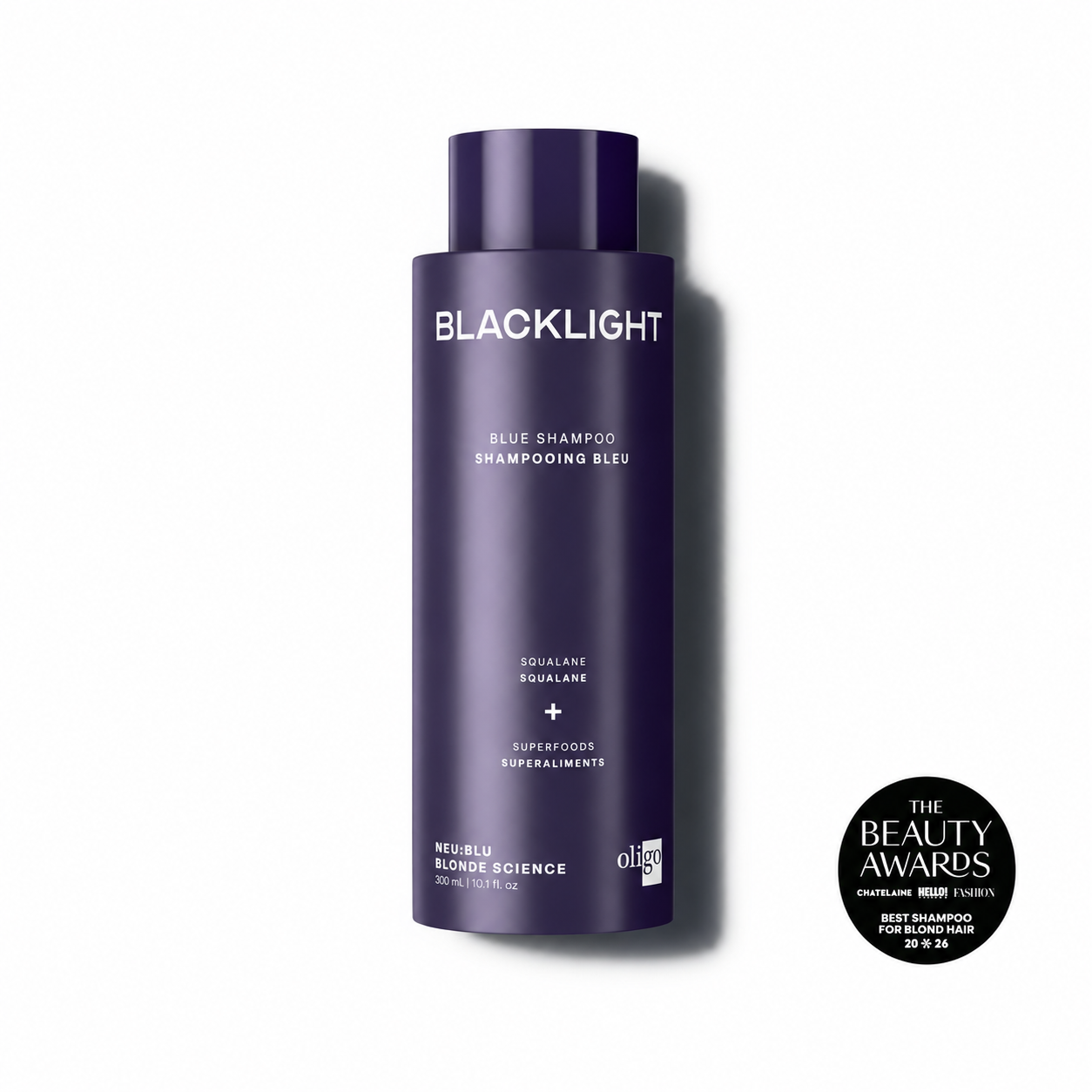
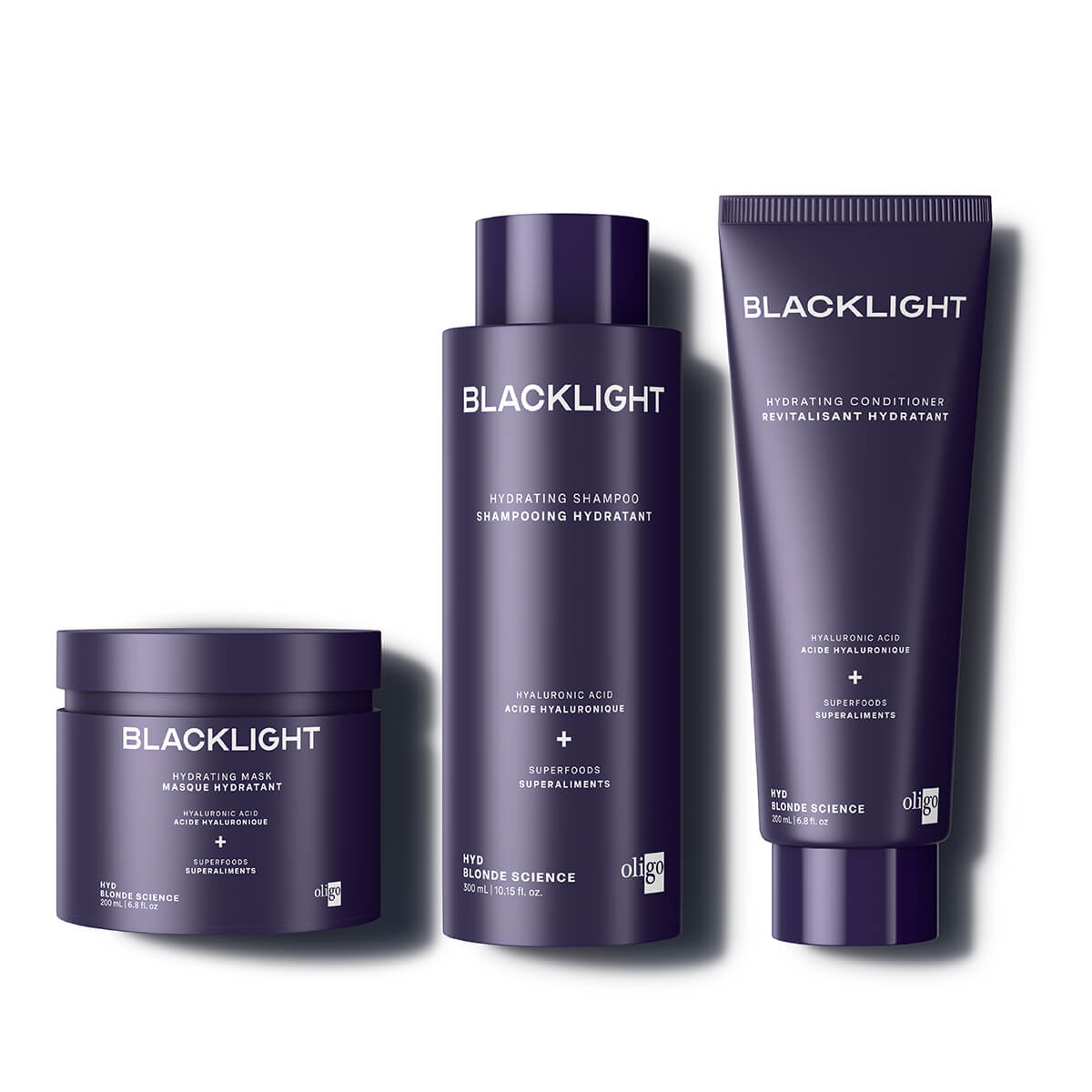
Violet shampoo, conditioner, neutralizing spray, and repair mask — science-led blonde hair care, made in Quebec.
Shop Toning Products Try a Mini First (60ml)
Discover Your Ideal Haircare Routine
Answer a few quick questions to get your personalized routine (and receive a gift!).


