


How to Tone Hair at Home: Step-by-Step Guide
To tone hair at home: identify whether your hair shows yellow tones (use violet shampoo) or orange tones (use blue shampoo). Apply to wet hair, leave on 3–5 minutes, follow with matching conditioner, and use a neutralizing spray between washes to maintain tone. Seal results with a weekly repair mask. Most people see a visible difference after 1–3 uses of the correct product.
What Does Toning Hair Actually Mean?
Hair toning is the process of depositing colour-correcting pigment onto bleached or lightened hair to neutralize unwanted warm tones — yellow, orange, or copper — and restore a cool, balanced, or neutral colour. It's not the same as dyeing your hair a new colour. Toning works within the existing level of lightness, adjusting the tone rather than the depth.
The science behind it is straightforward: colour theory. Pigments on opposite sides of the colour wheel cancel each other out when combined. Violet cancels yellow. Blue cancels orange. Toning products — shampoos, conditioners, and sprays — carry these corrective pigments and deposit them onto the hair shaft with each use.
At-home toning with shampoos and sprays is fundamentally different from a salon toner. A salon toner is a semi-permanent dye applied at full saturation after bleaching — it makes a dramatic, immediate shift. At-home toning shampoos deposit smaller amounts of pigment with each wash, correcting and maintaining tone gradually over multiple uses. Both have their place: the salon toner does the heavy lifting; at-home products sustain the result.
Step 1: Choose the Right Toning Product for Your Hair
The single most important factor in successful at-home toning is choosing the correct product for your specific brassiness tone. Using the wrong one won't just be ineffective — it can actually make things worse. Blue pigment on very pale yellow hair can create a greenish cast. Violet on orange hair will do very little.
Check your hair in natural daylight — bathroom lighting is notoriously bad at revealing warm tones. Look at your ends, mid-lengths, and roots separately, as they often have different levels of brassiness.
Your hair shows yellow if…
- Ends look pale gold, straw, or "brassy blonde"
- Hair looks dull and washed-out rather than warm
- You have platinum, icy blonde, silver, or grey hair
- Highlights look golden rather than cool
Your hair shows orange if…
- Roots or mid-lengths look copper or warm brassy
- Lightened sections have a red-orange hue
- You have dark blonde, balayage, or bronde hair
- Hair looks peachy or "warm" overall
| Hair type | Common brassiness | Recommended product |
|---|---|---|
| Platinum / icy blonde | Yellow, pale gold | Violet shampoo + conditioner |
| Light blonde / highlighted | Yellow, straw-toned | Violet shampoo + conditioner |
| Silver / grey | Yellow, dingy tone | Violet shampoo + conditioner |
| Dark blonde / bronde | Orange, copper | Blue shampoo + conditioner |
| Balayage / ombré | Yellow at ends, orange at roots | Alternate violet + blue |
| Lightened from dark brown | Strong orange / copper | Blue shampoo + conditioner |
Step 2a: How to Tone Yellow Hair at Home (Violet Shampoo)
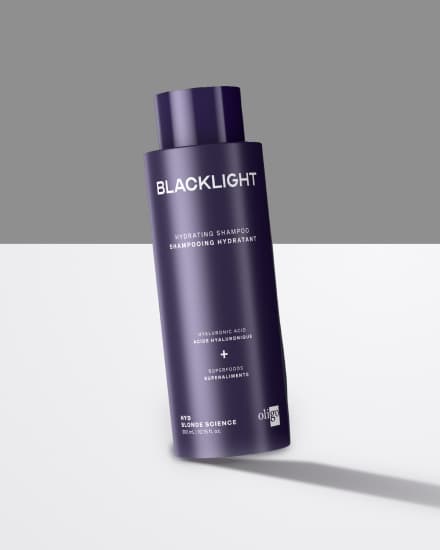
Violet — also called purple — toning shampoo is the most widely used at-home toning product, and for good reason. It directly targets the most common form of blonde brassiness: yellow and pale gold tones that develop as blue pigment fades from the hair shaft. Here's exactly how to use it.
Step-by-step: using violet shampoo to tone at home
Wet hair thoroughly before applying
Fully saturated hair distributes toning pigment evenly. Applying to partially wet or dry hair creates uneven absorption — some sections will over-deposit while others receive no pigment at all.
Apply violet shampoo generously from roots to ends
Work through all sections and lather well. Don't use a small amount — full, even coverage is necessary for consistent toning across the whole head. Focus extra product on the areas showing the most yellow.
Leave on for 3–5 minutes
This is the most common mistake people make — rinsing too quickly. The violet pigment needs contact time to deposit into the hair shaft. For correcting existing brassiness, 3–5 minutes is the target. For very porous or heavily bleached hair, start at 2 minutes and increase over subsequent washes.
Rinse thoroughly
Rinse until the water runs clear. Incomplete rinsing can leave product residue that builds up over time and causes dullness.
Apply violet conditioner and leave on 2–3 minutes
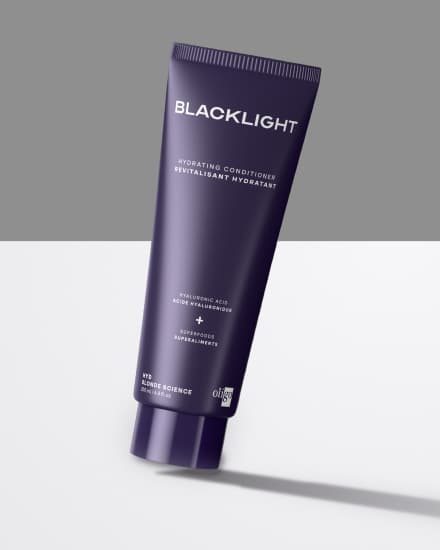
The matching conditioner adds a second layer of violet pigment while simultaneously hydrating and softening bleach-damaged hair. This step significantly extends how long your toning result lasts after each wash. Don't skip it.
Repeat 2–3 times per week until tone is corrected
One wash rarely corrects significant brassiness — toning shampoo works cumulatively. Consistent use over 1–2 weeks builds up the corrective deposit progressively. Once tone is where you want it, drop to 1–2 times per week to maintain.


Step 2b: How to Tone Orange Hair at Home (Blue Shampoo)
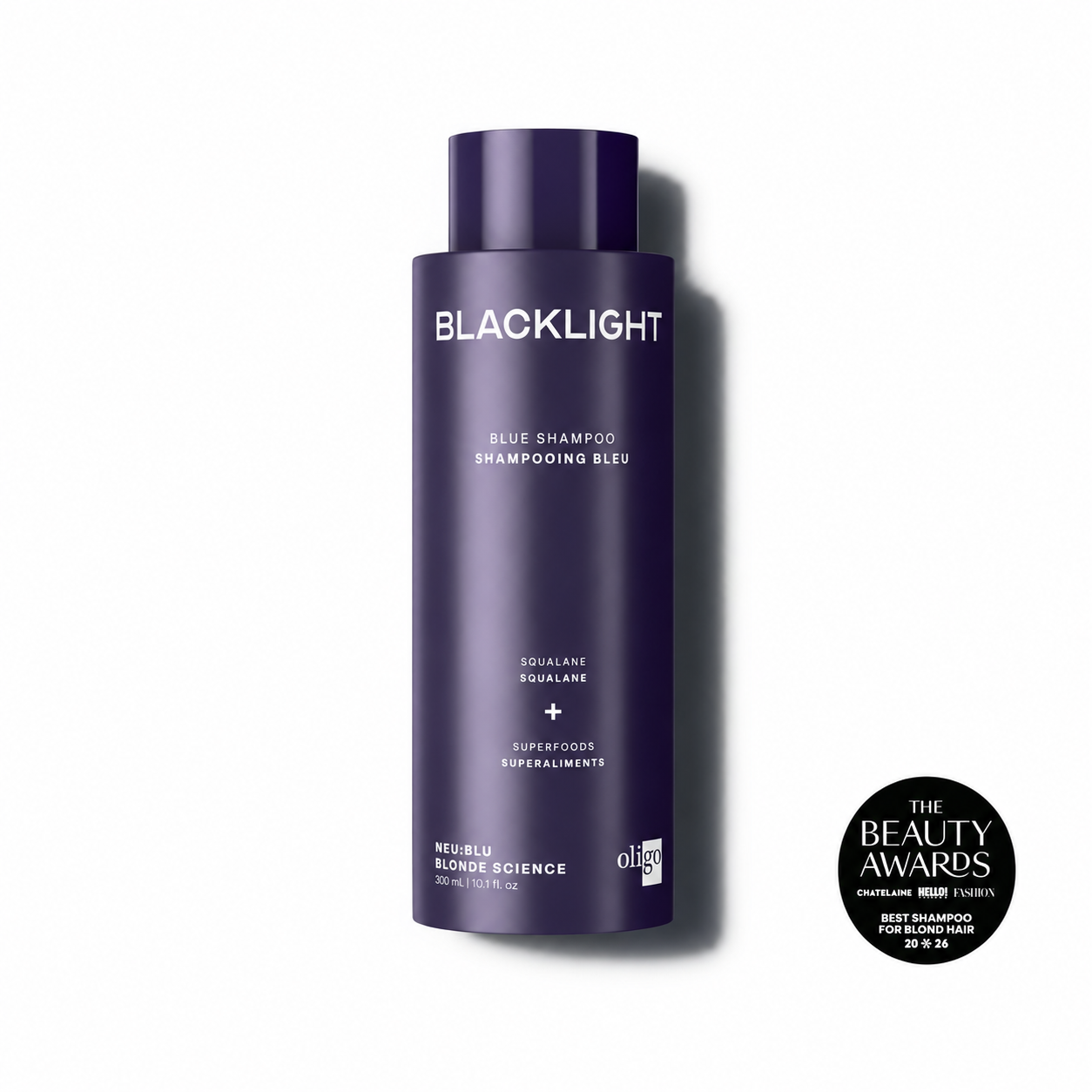
Orange brassiness is most common in dark blonde, balayage, and hair that has been lightened from medium or dark brown. When hair with more natural warmth is bleached, it often doesn't lift all the way through the yellow stage — it stops at orange or copper. A salon toner masks this initially, but as it fades, the underlying orange reappears. Blue shampoo is the only at-home toning product that directly targets this.
Step-by-step: using blue shampoo to tone at home
Wet hair fully before applying
Concentrate more product on the areas showing the most orange — typically the roots and mid-lengths where hair is darkest and warmth is most concentrated.
Apply blue shampoo and work through all sections
Lather from roots to ends. Pay particular attention to warm, copper-toned sections. The blue pigment needs full contact with the hair shaft to be effective.
Leave on for 3–5 minutes
Blue shampoo generally benefits from slightly more contact time than violet. For correcting established orange brassiness, 3–5 minutes is the target. For very stubborn or deep orange tones, up to 7 minutes maximum. Do not exceed 10 minutes.
Rinse thoroughly and follow with blue conditioner
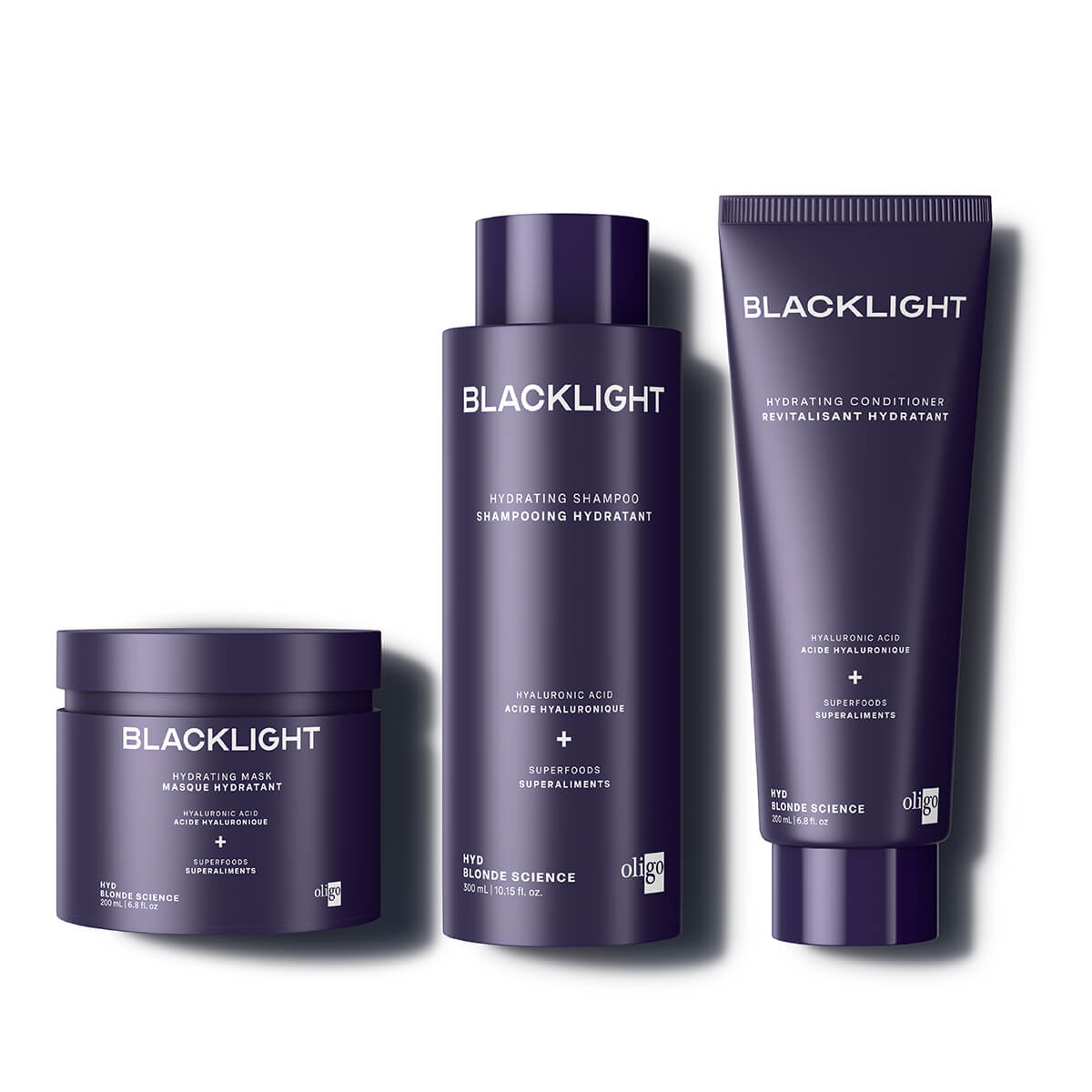
The blue conditioner reinforces the toning effect and addresses the dryness common in repeatedly lightened hair. Orange-toned hair from multiple bleach sessions is often brittle — the conditioner works on both issues simultaneously.
Use 2–3 times per week until brassiness is corrected
Orange brassiness can be more deeply embedded than yellow — consistent use over 1–2 weeks gives the most reliable results. Once corrected, maintain with 1–2 uses per week and a plain sulfate-free shampoo on other days.


Step 3: Maintain Tone Between Washes
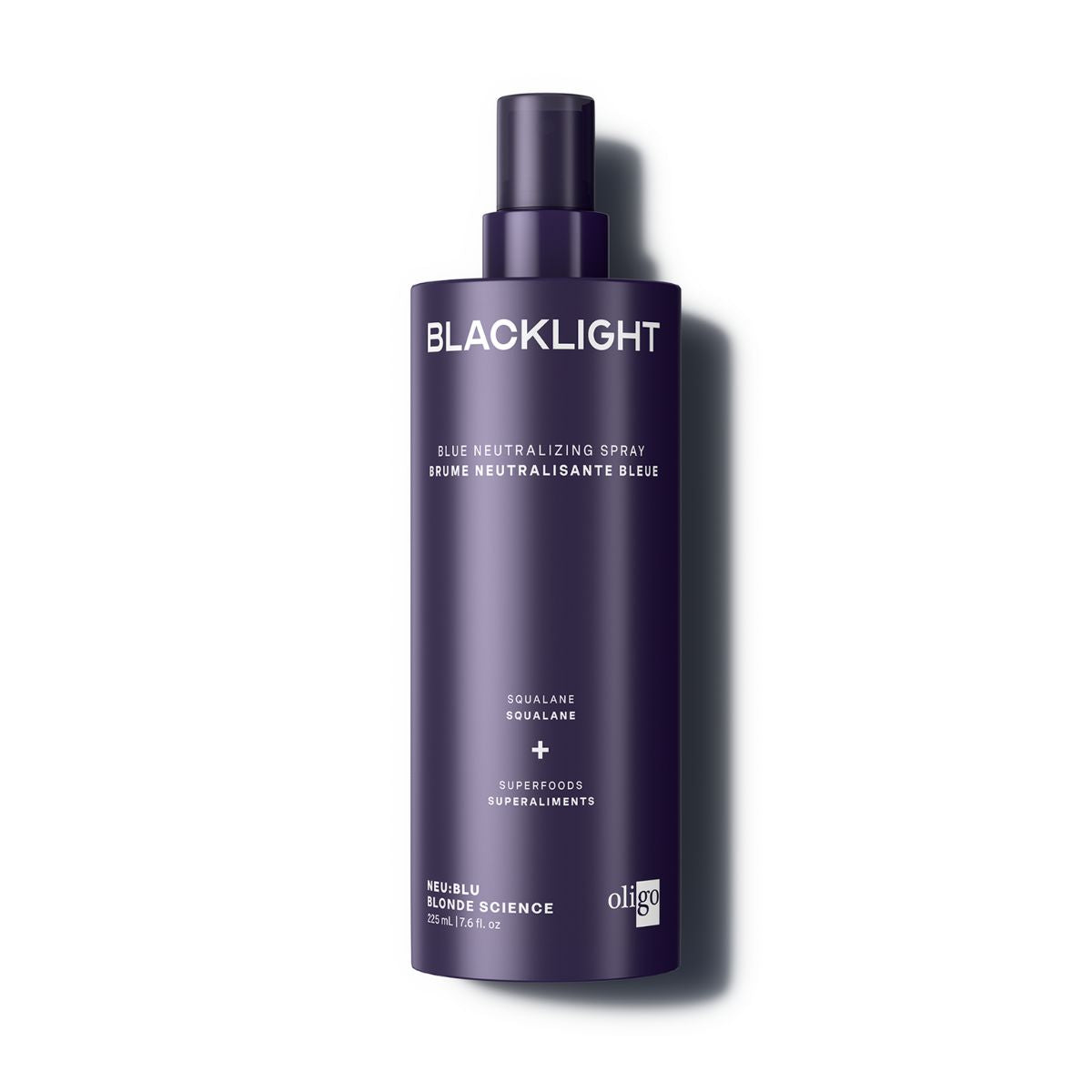
Most people wash their hair every 2–3 days. In the time between washes, warm tones gradually resurface — especially after heat styling, sun exposure, or swimming. A neutralizing spray closes this gap: it deposits toning pigment directly onto dry or damp hair without any washing, letting you refresh your tone in minutes whenever it's needed.
Neutralizing sprays use the same colour-theory logic as toning shampoos — violet for yellow, blue for orange — but the leave-in format means targeted, on-demand application. Spray onto the sections showing the most warmth, leave in, and style as normal. No rinse required.
When to use a neutralizing spray:
- Day 2 or day 3 hair that looks warm or dull since your last wash
- After heat styling — blow-drying, flat ironing, and curling all accelerate tone fade
- Before an event when you want a quick cool-tone refresh without a full wash
- After outdoor time — UV exposure is one of the fastest ways to develop brassiness
- Travelling — the mini 60ml format is TSA and CATSA approved


Step 4: Make Your Toning Results Last Longer
The most frustrating part of at-home toning is when results seem to fade within days. This happens because bleached hair has a physically raised, roughened cuticle — a direct consequence of the lightening process — which allows colour molecules to escape more easily with every wash and heat styling session. The toning pigment you deposited leaves as fast as you put it in.
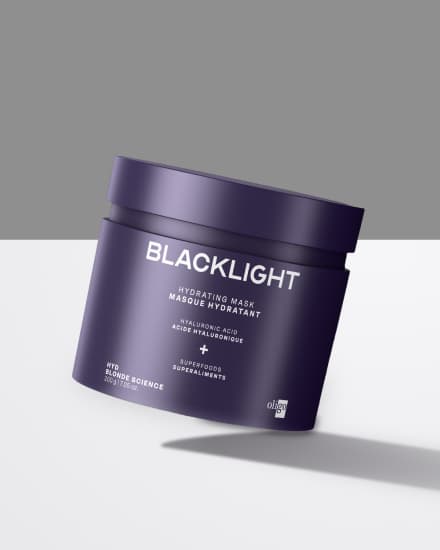
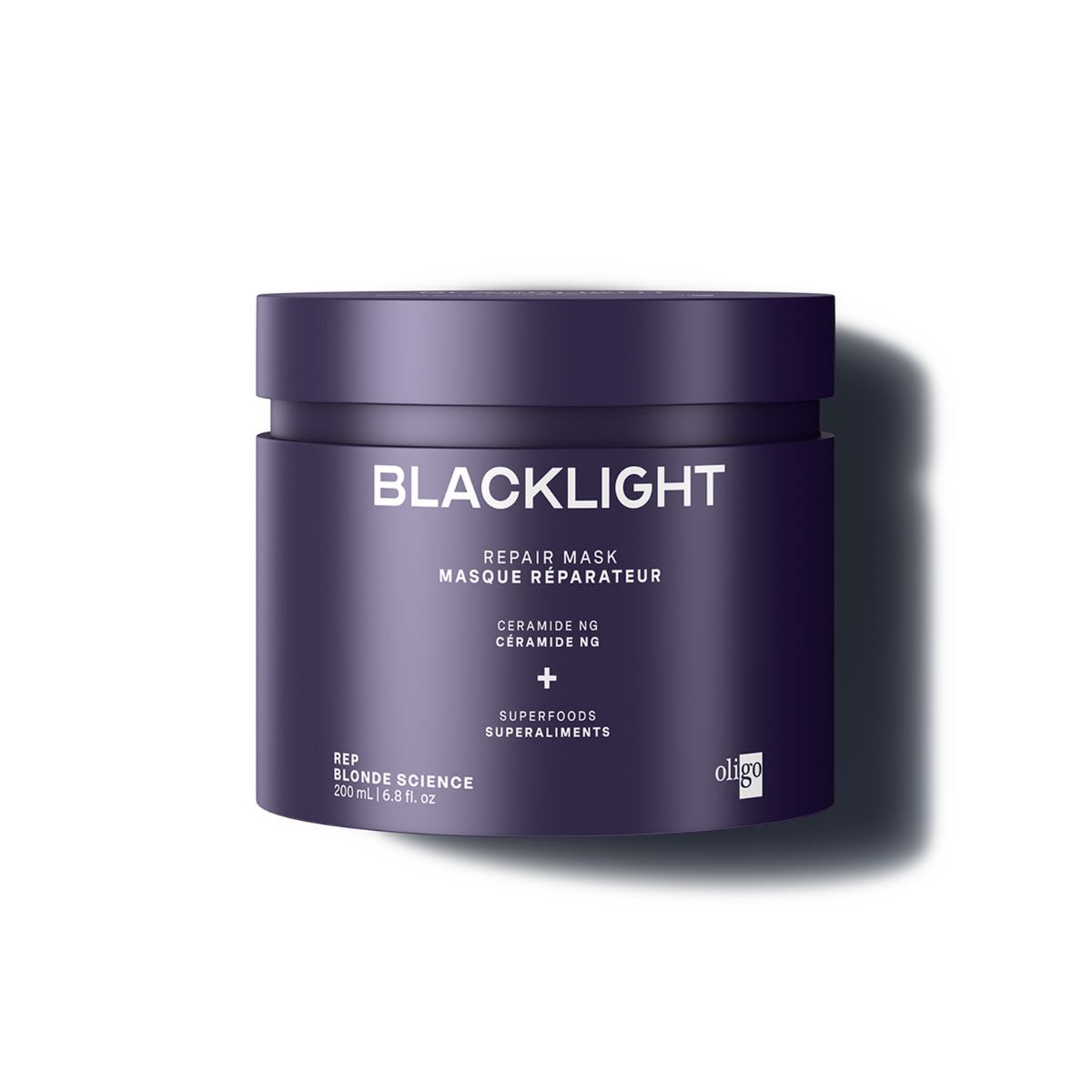
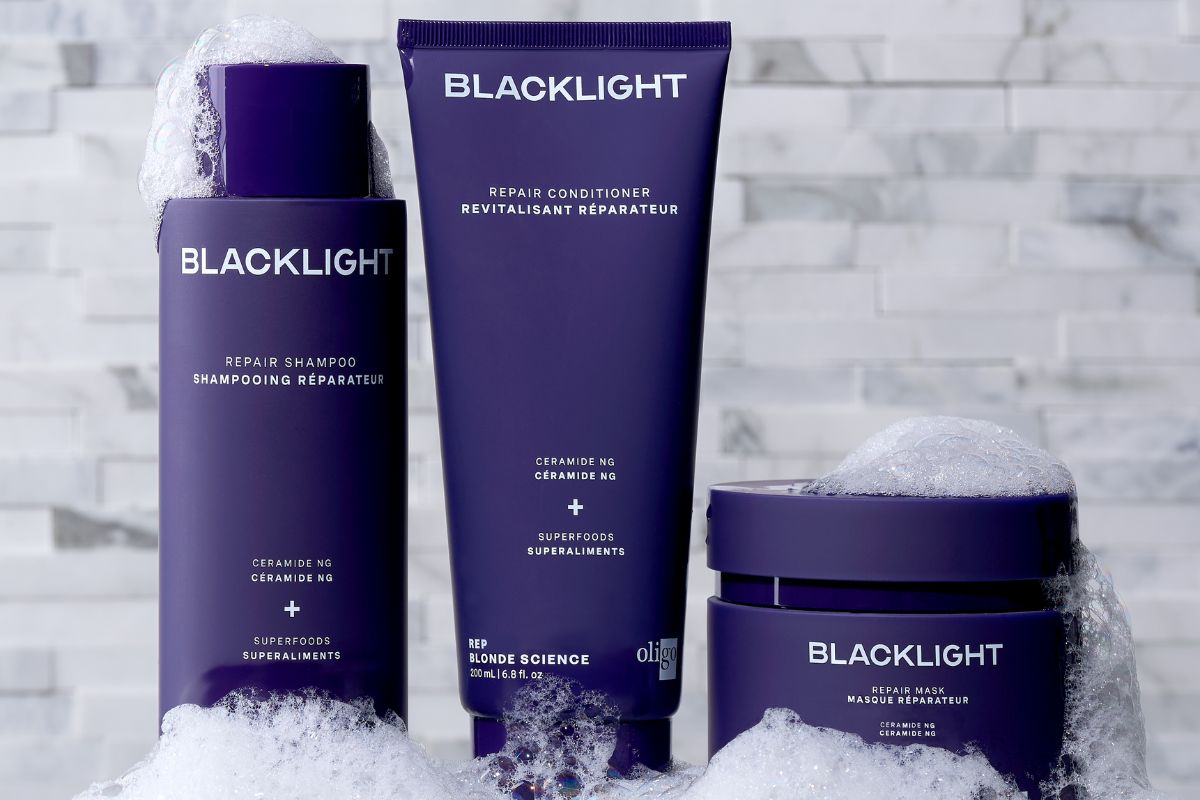
A weekly repair mask that penetrates the hair cortex and smooths the cuticle is the most effective way to slow this. By structurally repairing the hair from the inside and sealing the surface, it reduces the rate at which pigment escapes — meaning your toning shampoo works harder and lasts longer.

How Often Should You Tone Your Hair at Home?
The right toning frequency depends on two things: how brassy your hair currently is, and how porous your hair is. Porous hair (common with heavy bleaching or chemical processing) absorbs and releases pigment faster — it needs more frequent but shorter applications. Less porous hair holds pigment better and tolerates slightly longer contact times.
| Stage | Frequency | Leave-on time | Goal |
|---|---|---|---|
| Correcting — visible brassiness | 2–3× per week | 3–5 minutes | Build up corrective deposit |
| Maintaining — tone is where you want it | 1–2× per week | 1–3 minutes | Sustain deposit, prevent fade |
| Touch-up — between washes | As needed | Leave-in (spray) | Refresh tone without washing |
| Other wash days | Remaining washes | N/A | Use plain sulfate-free shampoo |
Mistakes That Make At-Home Toning Fail
Most at-home toning failures come down to one of these seven mistakes. Avoiding them will make the difference between results that last days and results that last weeks.
| Mistake | Why it fails | What to do instead |
|---|---|---|
| Using the wrong product for your tone | Blue on yellow can create green; violet on orange does nothing visible | Check your tone in natural daylight before choosing |
| Rinsing too quickly | Pigment needs contact time to deposit — rinsing early means no toning effect | Set a timer: 3–5 minutes minimum when correcting |
| Using toning shampoo every day | Over-depositing causes temporary purple or blue tints; over-dries hair | Maximum 3× per week; use sulfate-free on other days |
| Skipping the conditioner | Missing a second toning layer; leaving hair dry and cuticle open | Always follow with matching toning conditioner |
| Continuing to use sulfate shampoo on off-days | Sulfates strip toning pigment faster than it can be deposited | Switch all washes — toning and regular — to sulfate-free |
| Skipping the repair mask | Raised cuticle from bleaching allows pigment to escape within days | Use a repair mask weekly to seal and slow colour loss |
| Waiting until hair is very brassy to start | Deep correction takes significantly longer than prevention | Start toning at your first wash after colouring |
Frequently Asked Questions
How do you tone hair at home?
To tone hair at home: identify whether your hair shows yellow tones (use violet or purple shampoo) or orange tones (use blue shampoo). Apply the correct toning shampoo to wet hair, leave on 3–5 minutes, rinse, and follow with matching conditioner. For between-wash maintenance, apply a neutralizing spray to dry hair — no rinsing needed. Use a weekly repair mask to seal the cuticle and make toning results last longer. Most people see a visible difference after 1–3 uses of the correct product.
What is the best way to tone blonde hair at home?
The best way depends on your brassiness type. For yellow brassiness in platinum, light blonde, silver, or grey hair: use a violet toning shampoo and conditioner 2–3 times per week, leaving the shampoo on for 3–5 minutes. For orange brassiness in dark blonde, balayage, or bronde hair: use a blue toning shampoo and conditioner on the same schedule. Pair either with a neutralizing spray for between-wash top-ups and a weekly repair mask to lock in results.
Can you tone your hair at home without a box dye or salon?
Yes. Toning shampoos, conditioners, and neutralizing sprays effectively correct yellow and orange brassiness at home without any box dye or salon visit. They deposit colour-correcting pigment directly onto the hair shaft — violet to cancel yellow, blue to cancel orange. For mild to moderate brassiness, these products are highly effective. For severe brassiness or major colour correction from very dark hair, a salon toner may be needed first, with at-home products used for maintenance afterward.
How long do you leave toning shampoo on at home?
Leave toning shampoo on for 3–5 minutes when correcting existing brassiness. For very porous or damaged hair, start with 2 minutes and increase gradually. For maintenance once tone is corrected, 1–3 minutes per wash is sufficient. Do not leave on for more than 10 minutes — over-depositing pigment can temporarily tint hair lavender or blue, which a clarifying shampoo will resolve.
How often should you tone your hair at home?
When correcting active brassiness: 2–3 times per week for 1–2 weeks. Once tone is corrected: drop to 1–2 times per week to maintain. Use a plain sulfate-free shampoo on all other wash days to prevent over-depositing. Between washes, a neutralizing spray can top up tone without a full wash cycle — use as needed.
How do you tone hair at home without it turning purple?
To prevent a purple tint: never leave violet toning shampoo on for more than 10 minutes; start with 2–3 minutes if your hair is very light, fine, or porous; use toning shampoo no more than 3 times per week maximum; and always use a plain sulfate-free shampoo on other wash days. If a purple tint does appear, one wash with a gentle clarifying shampoo will remove it — it is not permanent.
What is the difference between toning shampoo and a salon toner?
A salon toner is a semi-permanent dye applied right after bleaching — it penetrates the cortex and makes a dramatic, immediate colour shift. A toning shampoo deposits smaller amounts of corrective pigment with each wash, gradually correcting and maintaining tone over multiple sessions. Salon toners do the heavy lifting; at-home toning shampoos sustain the result between appointments. Both are effective for their intended purpose — they work best when used together as part of a complete routine.
How do you make toning results last longer at home?
To make toning last longer: switch to a sulfate-free shampoo for all washes (sulfates strip toning pigment fastest); use a repair mask weekly to seal the cuticle and slow colour loss; apply a heat protectant before every hot tool session; use a neutralizing spray between washes to top up tone without waiting for washday; and protect hair from UV exposure, which accelerates pigment breakdown. Read the full maintenance guide: How to Keep Blonde Hair Bright and Brass-Free.
Start Your At-Home Toning Routine
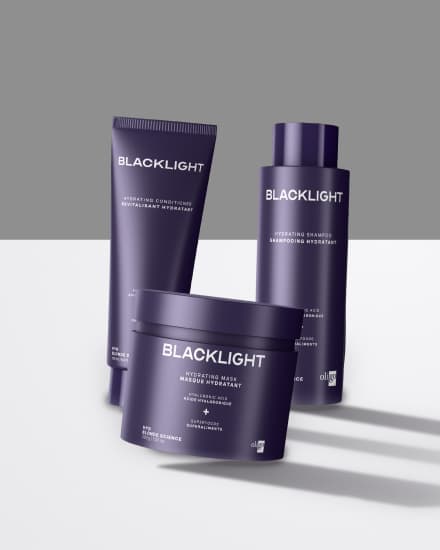
Violet and blue toning shampoos, conditioners, neutralizing sprays, and repair masks — science-led blonde hair care, made in Quebec.
Shop Toning Products Try a Mini First (60ml)
Discover Your Ideal Haircare Routine
Answer a few quick questions to get your personalized routine (and receive a gift!).


